


 Menu
Menu


The future of Epos: convenience is king
Elly Earls looks at the future of payments
Advanced Epos and payment systems might once have been out of reach for small businesses, but today thereâs no reason that even the most modest of operations canât get access to the technology â" and business benefits â" larger enterprises have been enjoying for years.
The best systems can not only significantly improve the customer experience, thanks to a choice of convenient, easy-to-use payment mechanisms, theyâre also offering big behind-the-scenes boosts for businesses, thanks to the unprecedented amounts of information on sales trends and customer preferences they can provide.
âItâs a very exciting time with the range of payment mechanisms coming to the market that are open to all businesses, regardless of shape or size,â says Seamus Smith, chief executive of payment solution provider Sage Pay. âWhether youâre a small business or a large enterprise, everyone can get access to enterprise-standard technology now.â
Worldpay UKâs chief marketing and commercial officer James Frost agrees: âIn the past, these solutions existed, but they might have been a few thousand pounds. Today, you might only have to pay £250 up front and then £50 a month, which brings these systems into reach for even the smaller companies that previously might not have thought that the technology was for them.â
So what can operators expect from the best systems on the market today? First off: convenience. âCustomers donât appreciate having to queue up for a bill; they want to be able to pay at the table and do so in a fairly convenient way,â Smith says, adding that the systems heâs most excited about at Sage Pay are the companyâs pay at table and pay at counter offers, which provide operators with the capability to take payments in different currencies and customers the option to split payments.
âThis creates a virtuous circle of customer satisfaction, which is eminently realisable with the technologies and applications that are out there.â
Worldpayâs all-in-one tablet-based point-of-sale solution My Business Hub is another example. At quick-service restaurants, orders can be placed on tablets in the queue, which reduces waiting time, while at full-service restaurants staff can carry the tablet with them anywhere on the premises and orders can be taken instantly and processed quickly.
Plus, the system is proving useful in prompting servers to ask customers if they need anything more, the net effect being that staff members are empowered and able to engage on a personal level with customers and equipped with the means to drive additional sales and encourage customers to return.
Adds Frost: âWeâve also done some research recently that looks at the knock-on effect for a business of having the right technology. If youâre equipped with professional-looking technology, around three-quarters of the people we surveyed said that was something that enhanced their impression of the business. Itâs not only a very efficient thing for the business owner to do, it also creates a professional image for their customers.â
The integration opportunity
Equally important is that any payment technology an operator chooses to invest in can integrate not only with the businessâs Epos system but also with everything from table management solutions to loyalty programmes. âPayment applications on their own are fine but where they really add value, particularly in a sector like catering, is where they can integrate with other applications in the business,â Smith stresses.
âFor example, weâve been working with a number of mid-market restaurant chains in the UK and weâre not only integrating payment systems with the Epos system but also with the table planning/booking system, as well as enabling things like pay at table, including splitting payments, through mobile devices. Integration is where businesses can seek to gain most from the payment services, so itâs really important to look at that integration opportunity.â
Zhong Xu, director of hospitality product at Epos system provider Lightspeed, agrees. âWeâve seen that Epos is becoming part of a larger value chain for retailers, so its connectivity with other solutions is becoming more important than ever,â he says. âWe need to ensure that Epos fits seamlessly with the various other services retailers are offering, such as reservations, online ordering, loyalty, reviews and payments.â
Even just the simplest integration can be incredibly valuable for business owners. My Business Hub is an all-in-one solution that includes a payment system that accepts contactless and Apply Pay as well as cash and credit and debit cards, an Epos system and the My Business Dashboard, Worldpayâs online insights tool. Users can see both cash and card transactions on the dashboard, which also enables them to view and compare sales trends, keep on top of cashflow, manage reconciliation quicker and view invoices.
âIt allows the business to get a very good view on how theyâre trading,â Frost says. âSome of the features identify the busiest day of the week and the busiest time of the day and itâs all served back to the operator in a very simple way, giving them valuable information about their business.â
Taking this one step further, the most advanced systems on the market can also collect a huge amount of data about customersâ preferences, which can then be used to predict and present suitable products for the future, increasing customer loyalty and, ultimately, revenue.
âIn the US in particular, weâre seeing a number of new generation point of sale devices coming to market that are very much geared around this notion of being able to identify when a customer comes back to a store and start to accumulate data on their preferences and purchasing habits,â Smith remarks.
âUltimately, that can enable a business to present personalised offers to those customers to ensure that they have a high volume of repeat business, which is very important for certain businesses.â
The rise and rise of mobile
When it comes to payment mechanisms themselves, both contactless and mobile are clearly becoming a bigger part of the equation. Indeed, according to Sage Payâs 2017 Payments Landscape Report, contactless spend is now at record levels, with 38% of consumers now saying they regularly carry this payment option with them, while almost 69% of consumers have used mobile payments to pay or receive money in the last six months. This is a huge increase from 2015, when only 1% of those surveyed said they had used a mobile wallet and 4% a mobile app.
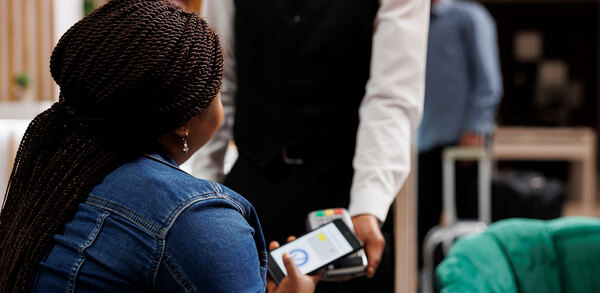
âItâs become a must to be able to offer seamless mobile payment applications and there are some good reasons for that,â Smith explains. âThe contactless payment limit is now £30, which covers a reasonable proportion of transactions in the catering world and the cost of accepting those payments is also typically lower than when the card is presented into a terminal. Moreover, those payments come with all the guarantees of electronic payments rather than the risks of cash payments, and itâs something customers expect.â
âAs mobile payment technologies get more advanced, customers are trusting their functions and security more and more,â adds Xu. âAs these technologies progress, and customers become more confident using them, they will expect businesses to offer them as a standard. Weâve seen this with many payment technologies and methods over time and mobile will be no different.â
That said, cash, credit and debit cards remain the main payment methods carried by consumers in 2016 (Sage Payâs research found that 35% of those surveyed regularly carry debit or credit cards, while PayPal also ranks highly with UK consumers, sitting just behind cash and cards as the most preferred payment option), meaning itâs still absolutely essential for hospitality operators to offer their customers a choice of payment options.
âThe message from Sage would be that businesses need to be open to capture as much business from their customers as they possibly can and that means offering as wide a range of payment methods as possible,â Smith says.
Navigating a confusing landscape
One of the biggest challenges facing operators today â" particularly smaller businesses that may not have considered anything beyond a traditional till before â" is that, with so many technologies and applications becoming widely available, it can be a busy and confusing landscape to navigate.
For this reason, Smithâs main advice is to talk to trusted payment service providers who can really explain whatâs coming along and which systems and applications can benefit their specific business. âYou shouldnât just be saying âI want a new card-processing payment terminalâ; the question is âWhatâs the application that can give me the most efficiency and best customer satisfaction in my business?ââ he says.
Itâs also crucial to invest in a system that can move with both the business and evolving trends. âFor independent businesses, long?evity is key,â Xu believes. âOperators should do their research and chose a solution that grows with them, a cloud-based solution that easily integrates with other services, will ensure their software is always up to date and gives them access to the latest features. Our world is changing constantly, so operators should make sure they choose a supplier that can ensure their Epos platform can grow alongside their business.â
Finally, operators should also consider that cash is â" albeit slowly â" on its way out, having been overtaken by other payment methods for the first time in 2015.
âWhile itâs still the predominant payment mechanism in the country at 48% of transactions, itâs gone down to less than 50% for the first time,â Smith notes. âAnd we would hope that it would continue to decline given the costs, both explicit and hidden, of dealing in cash for businesses.
âOver the next 12 months, we also believe an increasing range of direct to bank payment mechanisms, such as pay by bank app and digital wallets that use the bank account as a transaction mechanism, will come to market quickly and scale quickly. Businesses need to be geared up to accept those forms of payment.â
Ice-cream sites had payment licked
Although not many ice-cream shops have traditionally accepted card payment, let alone invested in a cutting-edge Epos system, Jack Button, owner of beachside café Jackâs Jetty Snacks, which serves seaside fare including milkshakes, ice-creams, burgers and coffees, felt it was the only way forward for his Great Yarmouth business.
âUntil a couple of years ago, I didnât even accept card payments, but over time I started getting requests to pay by card and I felt that was going to increase,â he says. âNow, with things like Apple Pay, Android Pay and contactless, I felt investing in an Epos system was the way to go.â
Button opted for Worldpayâs My Business Hub for several reasons. First, itâs an all-in-one system, which means thereâs only one monthly payment for the card terminal and the Epos system; second, the easy-to-use item catalogue reduces the chance of employee error when entering orders; and third, the systemâs business analysis dashboards means the team can gain valuable insights into the caféâs sales trends.
Button is already seeing increased spend because of the variety of payment methods the system offers, and he hopes to make use of the insights the dashboard offers. âItâs very early days, but as time goes on, I can compares sales against last year and as I build the item catalogue I will be able to see whatâs selling well,â he says.
Spoiled for choice
UK consumers want choice when it comes to ways to pay, says Sage Pay chief executive Seamus Smith
âConsumer expectation is driving innovation in the payments space, both online and offline, and businesses need to move with the times or risk losing customer loyalty. The majority (90%) of consumers we surveyed say itâs important for businesses to offer customers a diverse range of payment methods. Whatâs more, 58% claim they would be more likely to shop somewhere that offered multiple ways to pay.
âLikewise, businesses say the key benefits of offering a range of payment methods is access to a wider customer base. Customer demand is still the driving factor for businesses when it comes to introducing new payment methods, though legislation has become a more important consideration than beating the competition this year. Increased administration is thought to be the main disadvantage to offering different payment options. Only a quarter of businesses see no disadvantages, which suggests there is more to be done to make this process hassle-free.
âContactless is still going from strength to strength in the UK. In 2015, 9% of consumers rated it highly, in 2016 this has grown to 14% and will continue to grow. Thirty-eight percent of consumers say they carry this payment option with them.â
Hummus Bros dips into Epos
When Mediterranean restaurant Hummus Bros decided to invest in an Epos system, it wanted a solution that was easy to use, stable and able to integrate with the businessâs accounting system, Xero, as well as giving customers a quick and easy ordering and payment experience. Lightspeed hasnât let the business down.
âLightspeed delivers on all our must-haves from a system perspective, but also goes over and above this with their self-checkout tills as well as their amazing customer service,â says Hummus Bros co-founder Christian Mouysset.
The self-service aspect is one that Lightspeedâs director of hospitality product Zhong Xu believes is only going to become more popular. âConsumersâ preferences are changing fast as the evolution between online and offline accelerates. We are seeing huge growth in self-service options for restaurants and we think there is a huge opportunity with them in the future as customers demand efficiency and convenience more than ever,â he says.
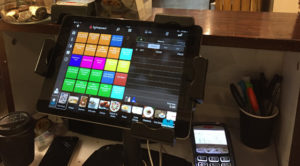
Looking to the future, there are a few additional features Mouysset would welcome to make the experience still more convenient. âWeâd love to see the system offer online delivery with ordering thatâs connected to the Lightspeed till,â he says. âInsights into our customers is also important, so weâd like more analytics and alerting based on the data.â
Sponsorâs comment: Sage Pay
A common challenge facing those in hospitality is how not to make the payment process an obstacle to good service. Simplicity in payments is key, so the process becomes seamless and staff can focus instead on food and ambience.
Mobile ordering devices in restaurants or cafés, integrated with Sage Payâs Pay at Table solution, allows servers to open their tables on a point of sale (PoS) terminal and ring up, pushing orders to the kitchen. When servers give tables their cheque, the payments device can retrieve the cheque by table number or cheque number, and the device can be used to leave a gratuity, split the bill, and take payment. The device will then automatically close off the table, making turnover more slick.
Payment habits are constantly evolving and weâre always looking to match requirements, providing all the necessary stages, but carried out in a more shorthand way, for a better consumer experience.







Most Popular


Webinar: AI for Guest Experience
 Wed Jan 28, 2026
Best Places to Work in Hospitality 2026
Wed Feb 4, 2026
The Caterer Supplier Awards
Thu Apr 16, 2026


The Caterer provides trusted hospitality news, analysis and trends for restaurants, hotels and catering professionals.

Jacobs Media is a company registered in England and Wales, company number 08713328. 3rd Floor, 52 Grosvenor Gardens, London SW1W 0AU.
© 2025 Jacobs Media
