


 Menu
Menu


AI in hospitality: The future is now
Artificial intelligence will reshape the industry, changing everything from the guest experience to fast-food production
The hospitality landscape is rapidly evolving, and AI is driving some of these most exciting changes. From freeing up valuable time to improving the guest experience, AI-powered solutions are enabling restaurateurs to focus on what matters most: great food and memorable service. With the rise of technologies like Large Language Models (LLMs), conversational chatbots and automation systems, AI is simplifying essential tasks that have historically drained resources. In doing so, it’s providing relief from some of the industry’s toughest challenges, including labour shortages and rising costs.
AI across all restaurant types
AI isn’t just a luxury for high-end establishments and booming multi-location businesses; it’s making waves across every corner of the hospitality industry. Whether it’s a quick-service local or a fine-dining restaurant, AI tools are improving operational efficiency and reducing bottlenecks in service. A recent survey from Deloitte’s European Hospitality Industry Conference found that 52% of customers believe AI will soon play a role in customer interactions, while 44% expect it to improve guest engagement. This shift is already happening, as major brands like Wendy’s, McDonald’s and CKE Restaurants integrate AI-driven tools into drive-thru systems to keep up with workforce shortages.
Robots in the kitchen: AI’s role in food preparation
But AI’s potential doesn’t stop there. Restaurants are turning to advanced generative AI tools to handle tasks like food preparation. Companies across the globe have introduced robots that assist with food assembly, particularly in tasks that involve hazardous ingredients like hot oil. By embracing these innovations, restaurants not only protect their workers but also improve safety and consistency across operations. While this particular type of AI adoption is a game-changer for quick-service restaurants, AI’s potential to streamline labour-intensive, time-consuming tasks extends to all types of restaurants.
Generative AI for content creation
Beyond automating routine tasks, generative AI tools are making life easier for full-service restaurants and hotels, which face unique service challenges. One of the standout applications of AI is in content creation. LLMs, which can produce human-like text, are now being used to craft everything from compelling marketing emails to dynamic menus.
Take Lightspeed’s own data, for example: restaurants using rich, well-crafted content in their online menus see a significant increase in conversion rates. Engaging language, vivid images and detailed descriptions boost interest – especially in Europe, where menus need to be tailored to various languages and cultures. LLMs allow restaurants to quickly generate high-quality content in multiple languages, pulling directly from ePOS data, saving hours of manual work.
AI: The secret ingredient to cutting food waste
AI-powered management tools, like advanced inventory management and forecasting, enable restaurant owners to tackle food waste more effectively. By integrating these tools with their ePOS systems, restaurateurs can adjust food stock based on demand, ensuring they only purchase the right quantities for each shift. AI-driven forecasting uses past sales data to predict optimal stock levels, minimising waste and preserving profit margins. Additionally, tools like Advanced Insights provide a deeper understanding of menu performance, helping identify popular dishes and adjust orders accordingly. Together, these AI solutions empower restaurants to make data-driven decisions, reduce waste, and drive revenue.
The future of AI in hospitality
As the hospitality industry continues to evolve, AI is shaping the way businesses adapt to the pressures of an ever-changing environment. Whether it’s streamlining operations, enhancing customer interactions or automating labour-intensive tasks, the impact is undeniable. AI allows restaurant staff to focus on what they do best – delivering exceptional dining experiences – while automating the rest.
In 2025 and beyond, AI will no longer be an optional luxury; it will be a cornerstone of success. As businesses prepare for the future, the importance of personalisation, sustainability and AI in hospitality will only grow. Whether you’re running a casual eatery or a fine-dining restaurant, adopting AI-driven solutions is no longer a question of “if,” but “when”.
Key takeaways
The hospitality industry is undergoing a profound transformation. AI isn’t just a trend – it’s a game-changer. From enhancing customer interactions to streamlining operations, it’s helping businesses tackle ongoing challenges while improving efficiency. As AI continues to reshape the industry, restaurants are getting smarter, safer, and more efficient, ensuring they’re ready for whatever the future holds.
Stay at the forefront of innovation. Discover how to upgrade your tech!










Most Popular





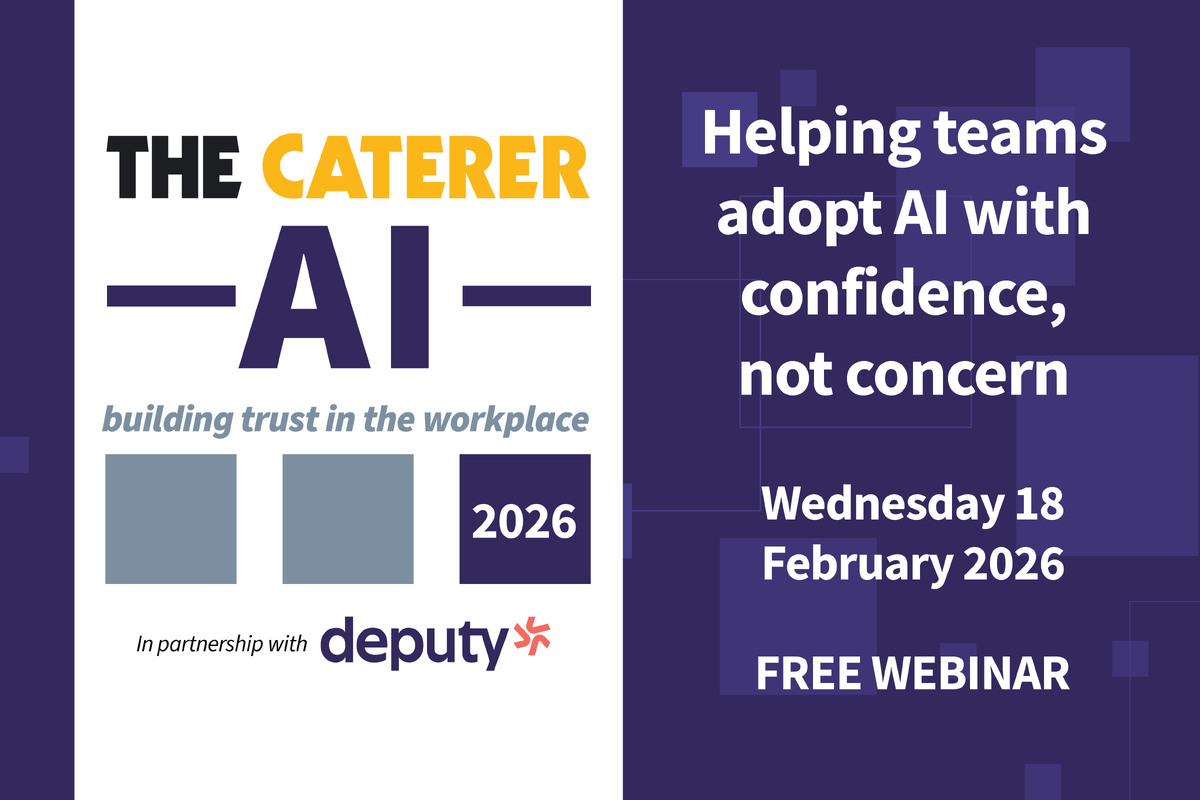
Webinar: AI - building trust in the workplace
 Wed Feb 18, 2026
HRC
Mon Mar 30, 2026 ExCel London
The Caterer Supplier Awards
Thu Apr 16, 2026
The Acorn Awards 2026
Sun Jun 7, 2026


The Caterer provides trusted hospitality news, analysis and trends for restaurants, hotels and catering professionals.

Jacobs Media is a company registered in England and Wales, company number 08713328. 3rd Floor, 52 Grosvenor Gardens, London SW1W 0AU.
© 2026 Jacobs Media
