



 Menu
Menu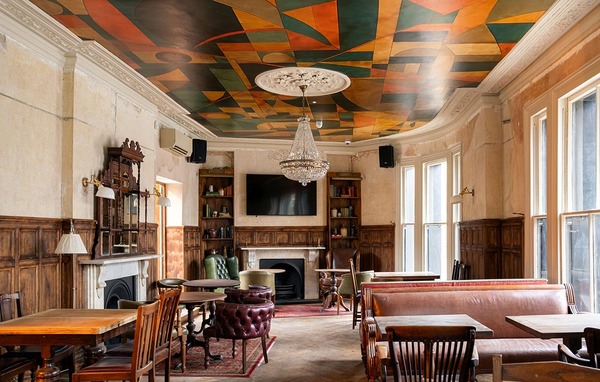


From narrowing pay gaps to tech shifts: the impact of a changing workforce on contract caterers

Contract caterers gathered at the Devonshire in London to discuss how a younger, tech-savvy workforce is affecting everything from management wages to contract wins
Boutique caterers are grappling with their desire to grow their businesses while being restricted by the cost of bringing in an inexperienced workforce.
According to attendees at The Caterer’s Directors’ Dinner at the Devonshire pub in London earlier this month, the impact of rising wages is reducing opportunities for young people and stifling growth, as well as creating a significant skills gap.
At the event, held in partnership with Kanpla, a small group of boutique contract caterers shared their thoughts on the state of the industry, and their people were a reoccurring topic throughout the evening.
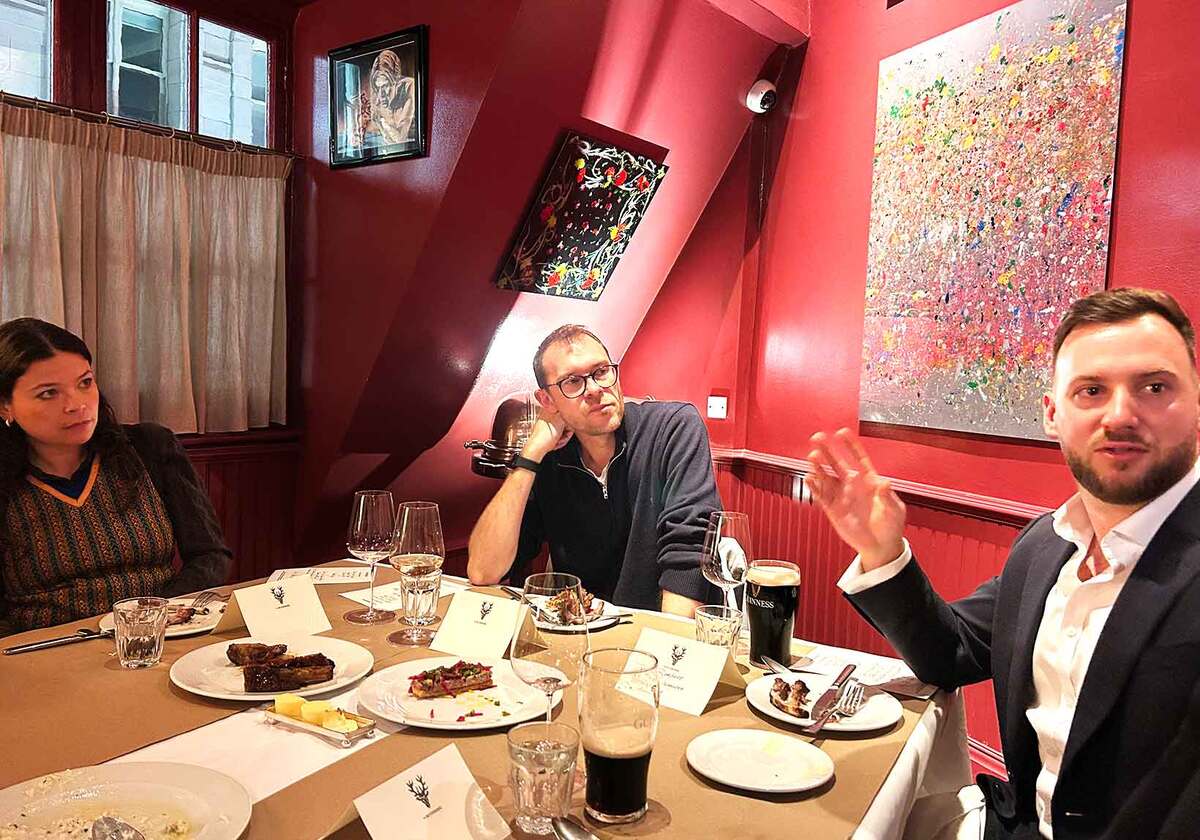
After participants dined on Iberico pork ribs, wagyu beef and truffled eggs, with a few pints of Guinness thrown in for good measure, the conversation kicked off with the impact of the government’s Budget at the end of November and its effect on wages.
“The thing that really concerned me the most was the increase in the National Living Wage for young people,” said Dan Kelly, founder of workplace caterer Savore. (The National Living Wage will rise by 4.1% to £12.71 per hour for eligible workers aged 21 and over from 1 April 2026.) “So you’re now going to start paying someone [younger] the same salary with less to no experience.
“The reason I got a job in hospitality washing the dishes was because I was cheap and I had no experience and was really eager, and once I passed my training, my salary went up,” he added.
“We believe that pay should reflect the work being done, not the age of the person doing it”
“Everyone deserves a fair salary – we are a National Living Wage employer for that reason – but with the gaps becoming smaller between salary groups, we have seen clients question the efficiencies of bringing in unskilled workers or team members with no experience and asking us to consider appointing supervisors, because it will only cost another £3,000 a year.
“Sadly, that means those who should be getting an opportunity won’t be getting one,” he added. “It could be devastating for our industry in the longer term, when we are already struggling with a shrinking talent pool. We are somewhat lucky in the business and industry sector, but the commercial sector pays lower salaries at those ages because of the costs of training incurred and the increase in National Insurance is just exacerbating that.”

Cost versus experience
Ed Walker, founder and chief executive of Fika Catering, added that this narrowing of the wage gap just results in a knock-on effect where businesses have to increase managers’ salaries to reflect their skill level.
Tony Trainor, chief executive at Mellors Catering Services added: “There’s a void underneath in terms of bringing in inexperienced people – but they’ve got to start somewhere. So it depends on whether the business has the capacity to bring those people in and train them effectively and stand that cost in the short term or whether you need to go straight in with someone that’s a supervisory level and a few grand more because your business can’t sustain that weight.”
However, others around the table believed age shouldn’t dictate earning potential. Paul Allen, managing director at Olive Catering, said: “We believe that pay should reflect the work being done, not the age of the person doing it. If two people are performing the same tasks to the same standard, they deserve the same rate of pay. Age should never be a barrier to earning fairly for equal work.”
Straying from the career path
Talk turned to the changing attitudes of younger workers, who are more conscious of work-life balance and hyper-aware of burnout. One director shared that one worker on an entry-level salary didn’t want to step into middle management because “it’s too much hassle for not much more pay”, while others spoke of workers who want to get into senior management immediately but without putting in the work to climb up the ladder.
“Younger generations are growing up with instant gratification and digital immediacy,” said Eline Henriksen, UK enterprise account executive at Kanpla. “In the workplace, meaningful results often take time, and building something worthwhile requires patience and consistent effort. This is a challenge across industries, but for hospitality in particular it can make attracting and keeping talent difficult, especially when margins are tight and the numbers alone don’t always make the sector an obvious choice.”
From a client perspective, the directors said that having great people practices means they can attract businesses who think a similar way about their own workforces.
Allen said: “Our most-valued clients are those who view the catering facility not as a business expense, but as an investment in their people. They recognise the genuine value we bring – not only to their teams, but to ours as well.”
Contracts differ in each industry, said Thomas Pass, co-founder of Thomas & Tate and founder of Culinera. “It’s usually driven by the basis of the contract. If it’s a fixed-price arrangement, which is usually the case in education catering, it’s likely that the client has outsourced for a reason. They see catering as a service and us as the experts, and they want as easy life as possible while they focus on their important day-to-day tasks,” he said.
“Other clients, typically in the B&I industry, which operates on a cost-plus contract, tend to come on the journey with you. If someone calls in sick or there is a logistical challenge, they tend to support us and want to help resolve it.”
Sustainability credentials – such as achieving B Corp – were once thought as another bow in a contract caterer’s arsenal when it comes to winning new business, especially against the bigger companies, but it seems to have become less of a differentiator as the wider industry adopts similar standards.
“We’ve had a few people in interviews saying they chose us because we’re B Corp”
“You can do all the right things, but then you go to a client site and their waste streams don’t match up,” said Katy Thompson, founder and managing director at workplace caterer Pinch.
Lily Cai, founder and director of Dinner Ladies, a B Corp-certified caterer, said: “It’s a nice to have: it’s up to you and your values, and if it’s something that’s important in your brand story – but you just have to hope that it’s also important to the clients.”
That said, the younger generation are looking to work for sustainable businesses. “We’ve had a few people in interviews saying they chose us because we’re B Corp,” added Cai.
Kelly agreed: “We’ve got some fabulous talent thanks to our approach to ESG, without doubt. Rather than a USP or sales tool, for us it’s a great barometer to know that we’re doing things the right way and that is what it all came down to when I started the business,” he said.
“It was all about providing the highest level of service, but doing it in the most ethical and environmentally positive way, while doing all that we could to help others. B Corp regulations ensure we adhere to that vision and continue down the correct path.”
Keeping the human touch
Artificial intelligence and the impact it is having on caterers was another hot topic over dinner, with the group agreeing that it should be used to amplify human capability, not replace it.
As the technology becomes more prevalent in contract catering – be it through tools such as self-checkout systems, data analytics or virtual assistants – the group saw it as a way to free workers from administrative tasks and enable the sort of creativity boutique caterers are known for.
Trainor said many clients are looking for AI-enabled self-checkout tills – even in the education sector. “A lot of education contracts want to be seen as innovative, so we’re bringing technology into some schools. It’s a great test case.”
Meanwhile, for Pinch, it was about looking at the data and learning how different systems talk to each other to make meaningful decisions for the future of the business. “For us, we’ll use it, but it will never be at the cost of humans at the forefront,” she said.
Pass agreed: “Our business is very tech-focused and we’ve invested a lot in data, but I still want our people to write their own emails and keep that human touch.”
“I’m quite excited,” added Kelly. “The learning opportunity for humans with AI is incredible – it’s like the internet being born all over again.”
He added: “I do see it enabling us to be a lot more creative because the admin side will be taken care of a lot quicker and our people will have more time for what matters: incredible service, new initiatives and keeping our customers happy.”
Henriksen said AI is about helping businesses make smarter decisions: “The key question is where it amplifies expertise and empowers people, and where it might take away the personality that makes what you do unique. AI shouldn’t overshadow, but surface expertise. That’s an important distinction, and I think the sector will start seeing it more clearly.”
Despite all the challenges impacting contract caterers, from rising costs and wages and Gen Z expectations to AI and beyond, the evening’s conversation reaffirmed that human connection, creativity and high levels of services won’t be going anywhere.
Attendees at the Directors’ Dinner
- Paul Allen, managing director, Olive Catering
- Toby Bonnett, head of innovation, Kanpla
- Lily Cai, founder and director, Dinner Ladies
- Eline Henriksen, UK enterprise account executive, Kanpla
- Dan Kelly, founder, Savore
- Thomas Pass, founder and co-founder, Thomas & Tate and Culinera
- Katy Thompson, founder and managing director, Pinch
- Tony Trainor, chief executive, Mellors Catering Services
- Ed Walker, founder and chief executive, Fika Catering
Photo: Aunging/Shutterstock







More from The Caterer
Most Popular




Best Places to Work in Hospitality 2026
 Wed Feb 4, 2026
Webinar: AI - building trust in the workplace
Wed Feb 18, 2026
The Caterer Supplier Awards
Thu Apr 16, 2026
The Acorn Awards 2026
Sun Jun 7, 2026


The Caterer provides trusted hospitality news, analysis and trends for restaurants, hotels and catering professionals.

Jacobs Media is a company registered in England and Wales, company number 08713328. 3rd Floor, 52 Grosvenor Gardens, London SW1W 0AU.
© 2026 Jacobs Media
