


 Menu
Menu


Give front of house a story to tell

Knowing the provenance of your produce is a way to upsell, add interest and leave a lasting impression on both staff and guests

One of the simplest ways to strengthen teams and improve the bottom line is to empower staff to tell great stories about the food and drink they serve.
Engaged and knowledgeable front of house teams can transform guest experiences, upsell naturally and build customer loyalty without major investment. Training staff to talk confidently about provenance, seasonality and pairings gives them a low-cost toolkit to add real value.
When teams understand the heritage and craft behind what they’re serving, it sparks conversations, enriches service and lifts spend per head, all while boosting staff confidence and pride.
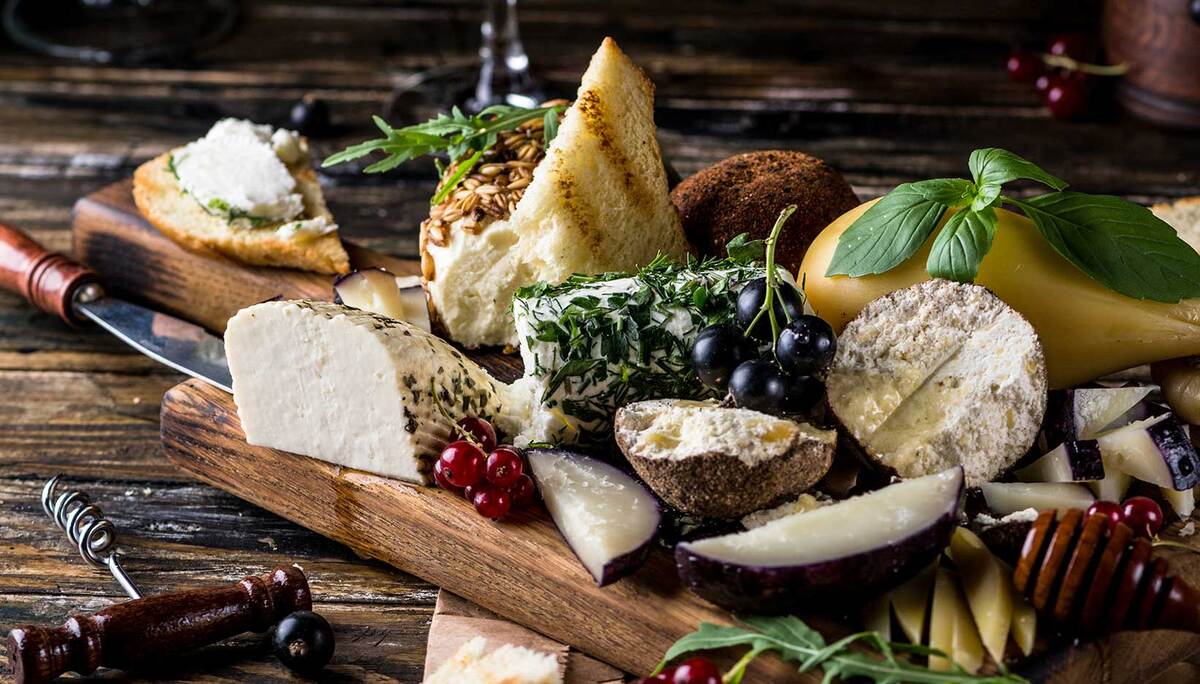
Cheese is a perfect example of how this works in practice. Serving guests a little something extra that tastes delicious but doesn’t require significant financial or staff resource can make all the difference. And there are few “little somethings” more conducive to storytelling and added value than beautifully presented slices of cheese.
Who should serve the cheese course?
A common question for operators is who should take responsibility for the cheese course. Chefs handle the food until it leaves the pass, the sommelier curates the wine list and the bartender makes the cocktails, meaning it often it falls to the pastry chef to order cheese alongside the butter and cream. However, cheese doesn’t require a dedicated gatekeeper. With modest training and a fresh look at where it sits on the menu, any member of staff can confidently champion it.
Training doesn’t need to be complex or costly. Many suppliers are happy to lead sessions on their produce, and bringing the team together – chefs, servers, bartenders – to taste cheeses and explore their stories helps everyone feel more confident and consistent.
There will almost certainly be one person in the team who already loves cheese and giving them time to understand flavour and texture as well as provenance and history will turn them into an in-house ambassador.
What’s the story behind the produce?
European products come with built-in narratives that deepen the dining experience and often fall under Protected Designation of Origin (PDO) and Protected Geographical Indication (PGI) schemes.
EU traditions offer plenty of inspiration: for example, Parmigiano Reggiano PDO from Italy and Roquefort PDO from France, already widely used in hospitality, have been made for 1,000 years and are protected by EU schemes that safeguard ancient methods and support rural communities.
Cheese can seem like an expensive ingredient, but its depth of flavour means you don’t need large quantities to satisfy guests. With the right accompaniments, one or two cheeses can create a light, balanced plate with opportunities for seasonal pairings. Take France’s Sainte-Maure de Touraine PDO, which is a distinctive, ash-coated, unpasteurised goat’s cheese from the Loire Valley, known for its tangy, slightly nutty flavour and creamy texture. It pairs beautifully with Spain’s Cereza del Jerte PDO cherries, whose sweetness offsets the cheese’s acidity.
Alternatively, Cantal PDO, one of France’s oldest cheeses, is a traditional semi-hard cow’s milk cheese with a firm, crumbly texture and a mild, buttery taste that becomes more pronounced with age. Serve it alongside roasted Oignon de Roscoff PDO – a sweet pink onion from Brittany – and a drizzle of Aceto Balsamico di Modena PGI from Italy, for a harmonious balance of savoury and sweet. Chefs can further personalise the plate with house-made pickles, jams or condiments they already use elsewhere.
The rise of relaxed evening drinking in the UK also creates space to position cheese as an apéritif. Small slices of Crottin de Chavignol PDO, a disc-shaped goat’s cheese from France’s Loire Valley, offer a nutty, tangy flavour that intensifies as it matures. Queso Manchego PDO from Spain, made from Manchega sheep’s milk, brings a firm texture and a rich, slightly salty taste, while Allgäuer Bergkäse PDO, a hard mountain cheese from the Allgäu Alps in Germany, adds a robust, savoury depth with subtle herbal notes.
Something on the side
All these cheeses can be partnered with complementary ingredients. Try adding a dry-cured ham, such as Jambon de Bayonne PGI from France or Jambon d’Ardenne PGI from Belgium, alongside roasted Spanish almonds for a simple, flavour-led start to the meal. For a distinctive twist, include Magiun de prune Topoloveni PGI from Romania, a traditional plum spread whose natural sweetness complements both mild and sharp cheeses.
Drinks pairing suggestions deepen the value even further: Swedish ice cider with French Fourme d’Ambert PDO, German Hefeweizen with Wrångebäcksost PDO from Sweden, Italian Vermouth di Torino PGI for a pre-dinner moment, or Irish whiskey PGI with Mossfield mature organic Gouda from Ireland to finish.
These small touches, rooted in provenance, seasonality and story, help teams feel more engaged and confident, enrich the guest experience and boost margins without major overheads. At a time when operators are looking for sustainable ways to support staff and strengthen their offer, empowering teams through storytelling is one of the most effective shifts they can make.
For more information, visit the campaign website or contact: morethanfood_UK@agripromotion.eu
Patrick McGuigan is a cheese author, educator and advisor to the EU’s More Than Only Food & Drink Campaign
Photo: Chokniti-Studio/Shutterstock and Alexandra Harashchenko/Shutterstock



Most Popular



Best Places to Work in Hospitality 2026
 Wed Feb 4, 2026
Webinar: AI - building trust in the workplace
Wed Feb 18, 2026
The Caterer Supplier Awards
Thu Apr 16, 2026
The Acorn Awards 2026
Sun Jun 7, 2026


The Caterer provides trusted hospitality news, analysis and trends for restaurants, hotels and catering professionals.

Jacobs Media is a company registered in England and Wales, company number 08713328. 3rd Floor, 52 Grosvenor Gardens, London SW1W 0AU.
© 2026 Jacobs Media
