


 Menu
Menu


Burnout ‘just part of the job’, say hospitality employees
Nearly half of Hospitality Action survey respondents reported a poor work-life balance

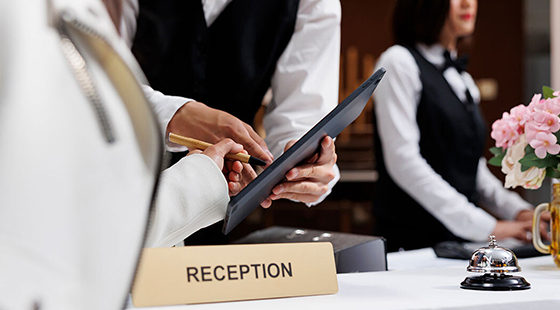
Poor work-life balance is becoming prevalent for hospitality staff, according to new research from UK charity Hospitality Action.
Almost half of respondents to the charity’s annual Taking the Temperature mental health and wellbeing survey, conducted in June, reported a poor work-life balance. Of those, 62% of junior hospitality employees said that burnout is just part of the job.
The survey also uncovered that among those citing a poor work-life balance and experiencing burnout as a daily reality, 61% had experienced a mental health issue in the past year, further highlighting the serious toll on individual wellbeing.
When asked to identify the top three workplace challenges affecting wellbeing in the workplace, under-resourcing and understaffing emerged as the primary issue, cited by 57% of respondents – a steep 21% increase compared to 2024. High expectations and excessive workloads followed at 52% (up from 43%), while work-life balance concerns were raised by 50% (up from 45%), reinforcing that conditions have deteriorated over the past year. Mental health is now cited as the third most common reason for absence from work.
While it is widely recognised that the hospitality industry has made progress in recent years around mental health awareness, training and employee support, the mental health crisis rate continues to outstrip the speed of the response.
Although 66% agreed that their workplace had created an environment where mental health can be openly discussed, there remains a concerning ‘lost third’ for whom there is no clear support. Sixty-three per cent were concerned that vocalising their mental health challenges could negatively impact their progression, a figure consistent with responses in 2024.
However, 78% of respondents now felt more comfortable discussing a mental health concern compared to five years ago, a 21% rise, indicating that the stigma around the issue is decreasing.
This shift is further reinforced by 89% of managers who prioritised listening as their first step in supporting team members, with 75% recognising the value of being able to signpost staff to an employee assistance programme (EAP) for help and support, up from 67% last year. Nevertheless, 55% of respondents called for more management training to help leaders better support their teams and identify mental health concerns early.
The survey also revealed another challenge: those at the top are struggling too. Long hours, staffing shortages and ongoing cost-cutting pressures are taking a toll on management-level personnel.
Mark Lewis, chief executive of Hospitality Action, said: “In many respects, these findings tell a tale of two halves. On the one hand, we must applaud the industry for its concerted efforts and investment to support the mental health and wellbeing of our colleagues. But there’s still work to be done, as proven by the record number of calls to our helpline this year, with the vast majority citing mental health issues.
“It’s clear that there remains a significant gap between policy and practice, with a disconnect between what employers believe they are delivering, and what employees actually experience. Whatever good is being done, the negative factors continue to outweigh. With 69,000 jobs lost since the National Insurance hikes in April, the pressure on those remaining is already evident, and safeguarding the wellbeing of our remaining workforce has never been more vital.”
Photo: Dikushin Dmitry/Shutterstock








Most Popular



Webinar: AI - building trust in the workplace
 Wed Feb 18, 2026
HRC
Mon Mar 30, 2026 ExCel London
The Caterer Supplier Awards
Thu Apr 16, 2026
The Acorn Awards 2026
Sun Jun 7, 2026


The Caterer provides trusted hospitality news, analysis and trends for restaurants, hotels and catering professionals.

Jacobs Media is a company registered in England and Wales, company number 08713328. 3rd Floor, 52 Grosvenor Gardens, London SW1W 0AU.
© 2026 Jacobs Media
