


 Menu
Menu


Eight things we learned at the FEA Conference 2025
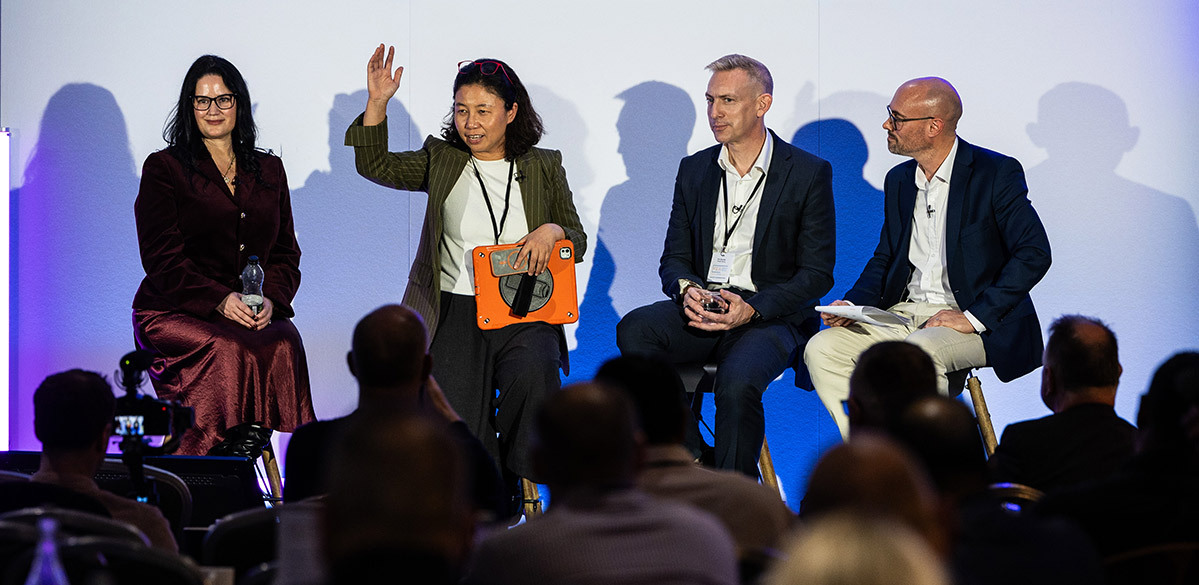
Delegates at the Foodservice Equipment Association’s conference heard how the industry is staying one step ahead of change
This year’s Foodservice Equipment Association Conference on 12-13 November at the De Vere Cotswold Water Park hotel near Cirencester, Gloucestershire covered topics ranging from technological advances in fast food to the right way to use artificial intelligence.
Here are eight takeaways from the debates.
Positive predictions for the Budget
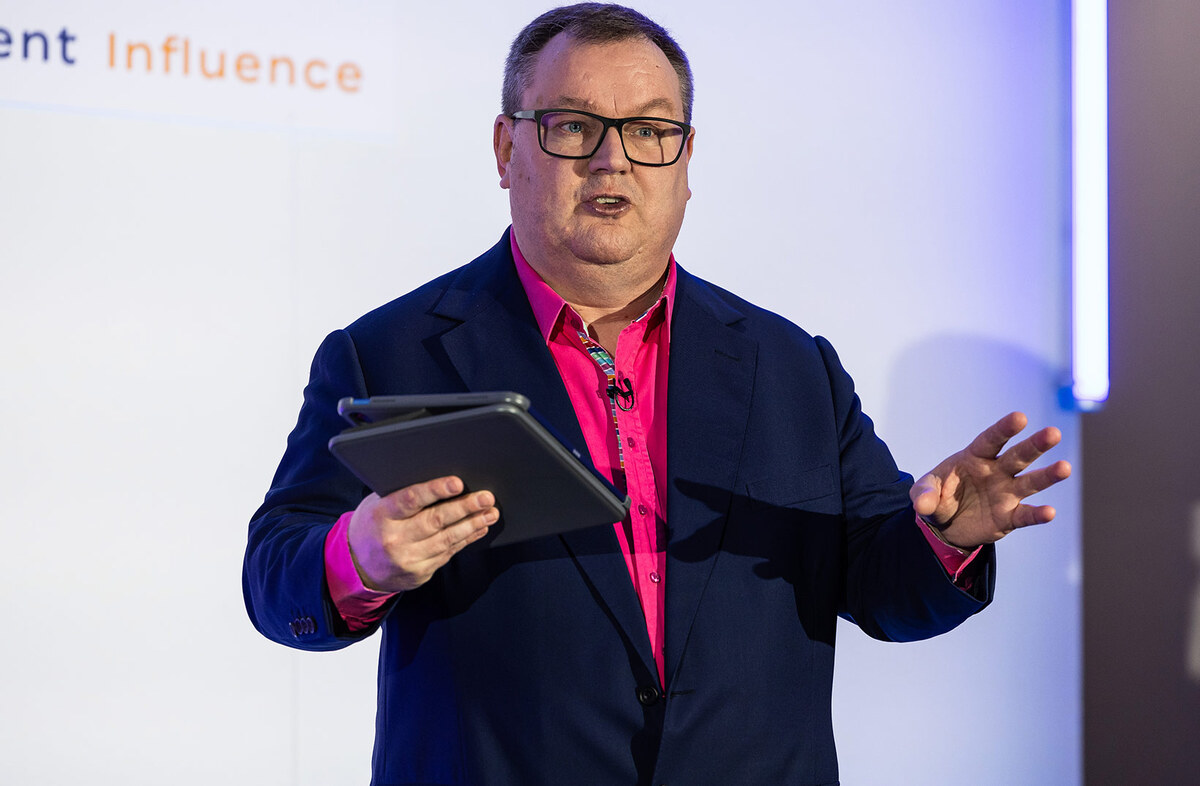
Business journalist and broadcaster Declan Curry kicked off the conference by telling delegates he doesn’t expect many new taxes directly on businesses in this week’s Budget. “The chancellor seems to have learned the lesson that last year’s hike in National Insurance Contributions for employers was damaging to the economy. It created a lot of pain for not much gain,” he said.
He predicted there may even be some additional help for industries in the leisure sector, including hospitality.
Get used to uncertainty
However, Curry also advised that nobody really knows what’s going to happen with the economy. “Everyone needs to be on constant alert for unexpected threats,” he said. “Business leaders have become better at reacting to them, but it’s not reasonable to expect them to be able to predict them because the world now is so crazy.”
Although Brexit and Donald Trump’s tariff trade wars are still casting “long shadows” over the trading environment, and economic growth was at a weak 0.1% over the last few months, Curry predicted we may see some revival in the next quarter, with the Bank of England forecasting 1.5% growth by the end of the year. He summed up: “The economy is struggling to maintain momentum in the face of higher taxes and slower demand.”
Read More


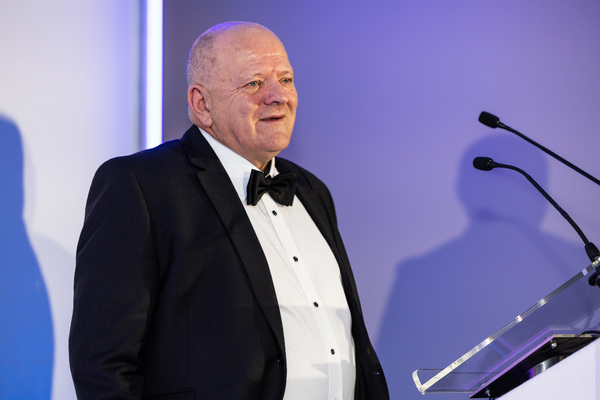
Fast food is embracing innovation
Michael Jones, editorial lead for analyst 1473 Media, reported that in the US, McDonald’s is topping fast food chain sales for 2025 at $53.5b (£40.7b), followed by Starbucks, ($30.4b or £23b), Chick-fil-A ($22.8b or £17.3b), Taco Bell ($16.2b or £12.3b) and Wendy’s ($12.5b or £9.5b).
He said that McDonald’s is maintaining market share by focusing on digital transformation, expanding its footprint and exploring menu innovation. One of the new technologies is geo-fencing, which alerts the kitchen crew when a customer who has ordered food via the app is approaching the restaurant. McDonald’s estimates this will reduce wait times by 50%.
Meanwhile, Starbucks has introduced its ‘Back to Starbucks’ plan to make it more resilient, opening espresso bars and reducing store size, and Chick-fil-A, is executing a core strategy that combines a high-quality but simple menu alongside a focus on customer service and a strong loyalty programme.
“We can’t stand still in this industry – if you do, you lose. Only the fittest will survive”
Venue design can drive business agility
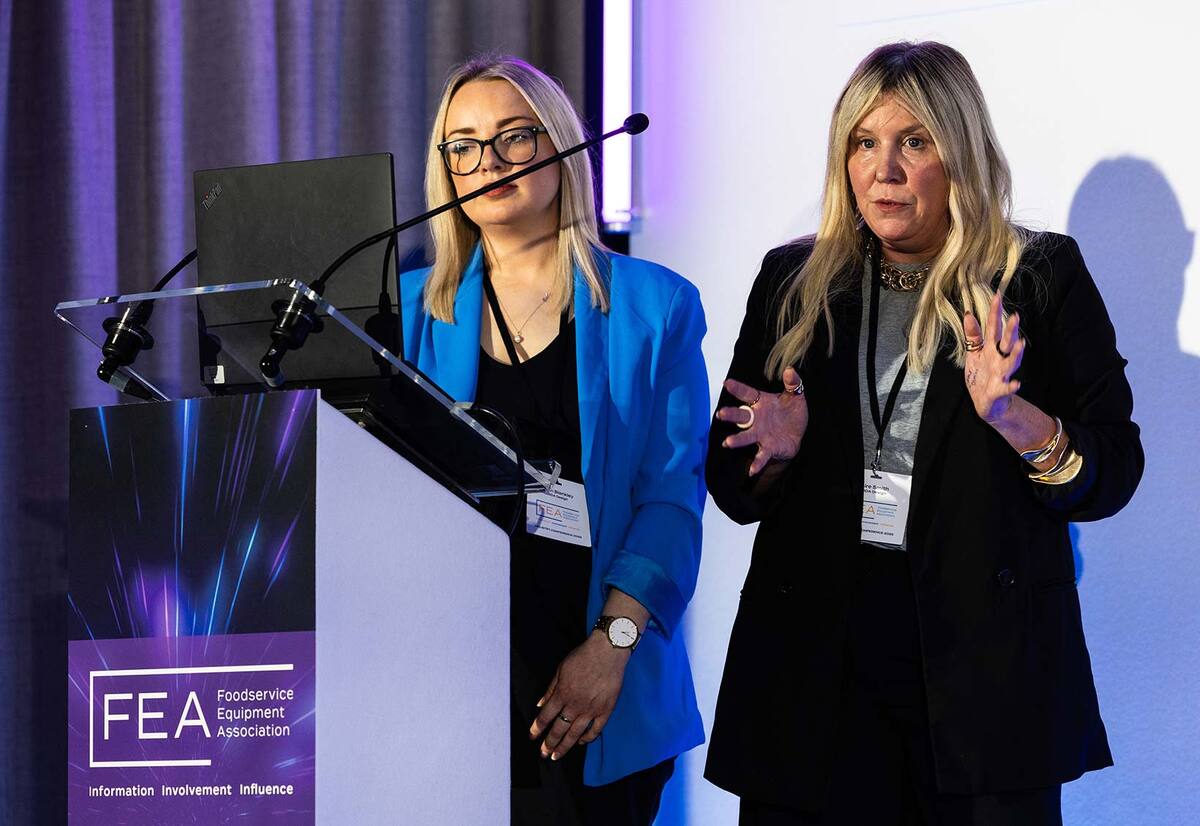
Claire Smith, managing director at interiors firm ABDA Design, told delegates that hospitality venues should be creating spaces that flex between different functions at different times of the day. “Dining and social habits change quickly, so invest in spaces that can be easily adjusted, allowing operators to respond quickly to what guests want, without disruption,” she said.
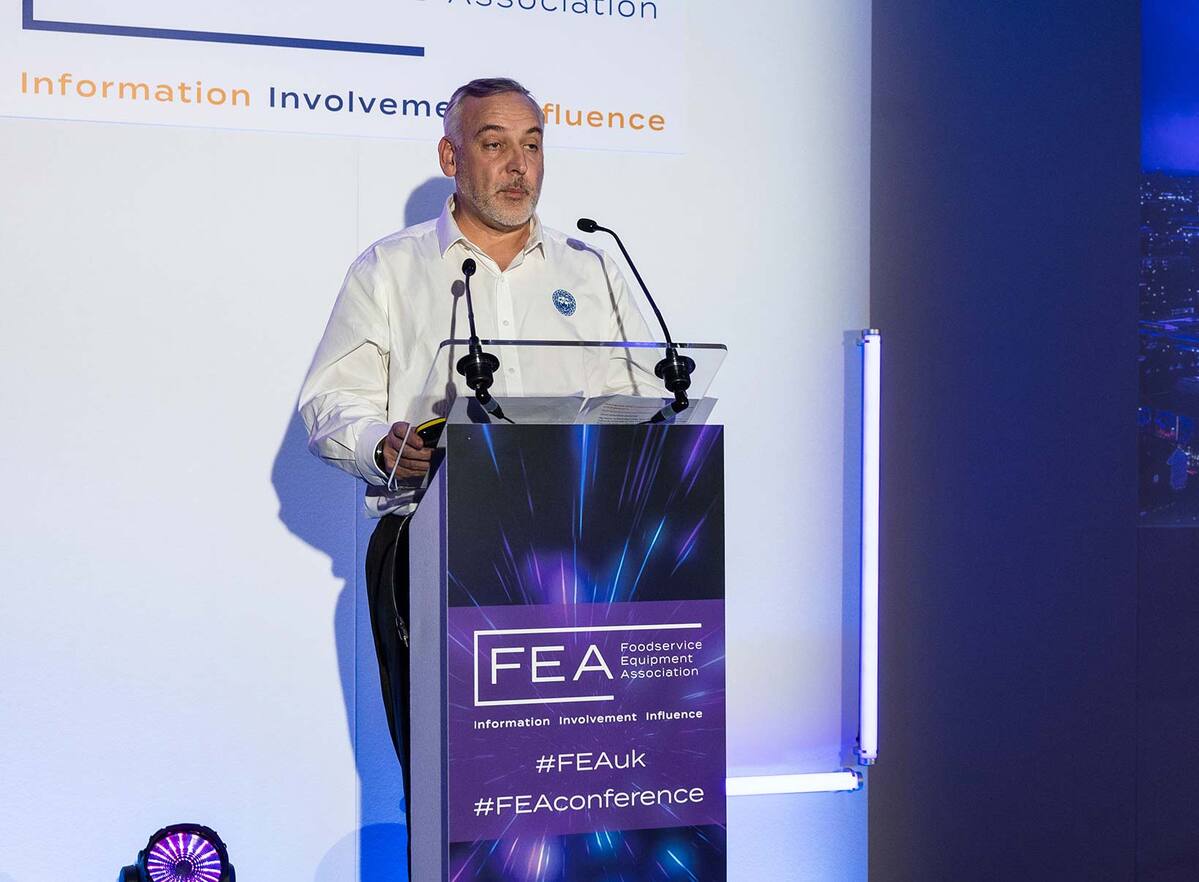
Peter Stadelmann, chief executive of cooking equipment firm Rational, added that business need to continuously evolve. “We can’t stand still in this industry – if you do, you lose. Only the fittest will survive,” he said, and added: “In the age of impossibility you need to have healthy finances and be fast in making decisions. If you have great products and take care of your customers, you don’t need to worry about growing and making profit – they will be inevitable.”
AI can enhance chefs, not replace them
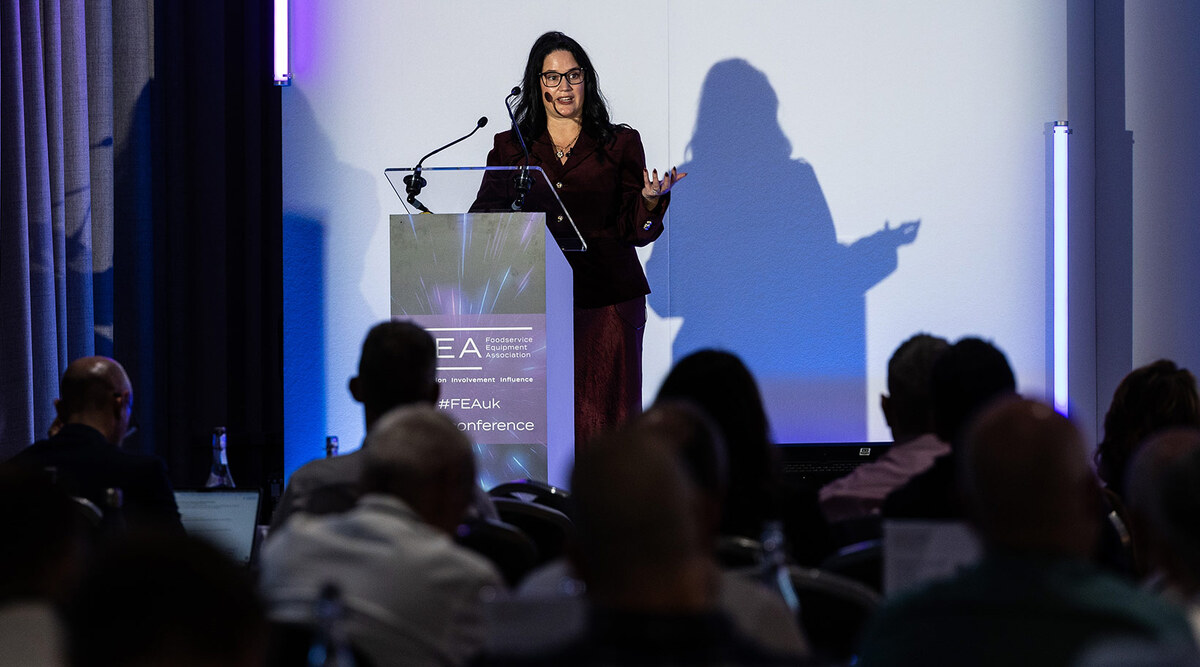
Multiple presentations on various aspects of artificial intelligence (AI) were kicked off by Mark Reynolds, executive chef at Levy UK and national chairman of the Craft Guild of Chefs. Reynolds shared: “AI isn’t here to replace chefs, it’s here to enhance them. It can learn patterns but it can’t live and breathe passion.”
He said AI could analyse thousands of recipes and suggest new flavour pairings or devise ways to use every ingredient in a recipe efficiently, minimising wastage.
Reynolds, who oversees operations at Tottenham Hotspur Stadium in north London, revealed that AI has assisted in an increase in revenue from £15m to more than £55m annually within six years. It analysed sales data and customer preferences in order to recommend which dishes the stadium keeps or drops, and for inventory tracking, allowing the team to move produce around the site rather than overproducing and causing wastage.
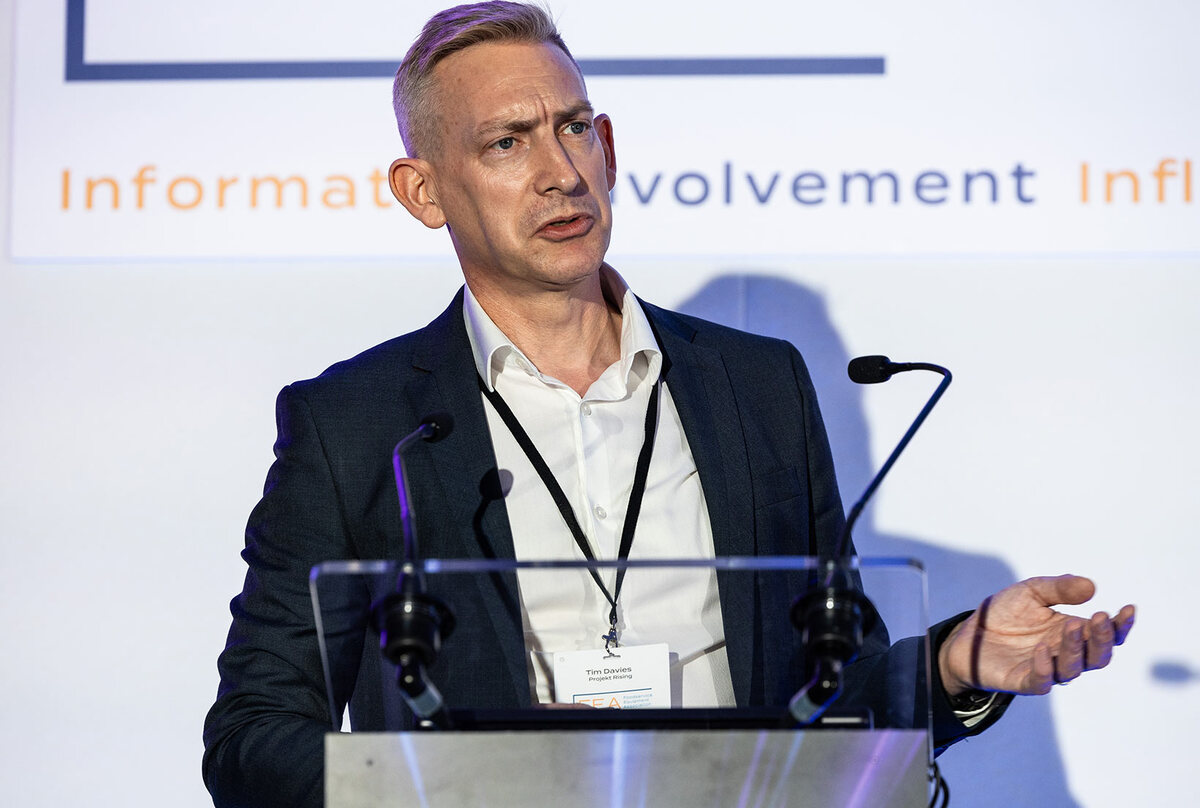
Meanwhile, Tim Davies, chief executive at AI consultancy Projekt Rising, said hospitality operators are using AI to create on-brand marketing material, but that it still needs to be reviewed by humans before being sent to customers. He feels that operators could also use AI to identify target market and craft automated communications, or even to answer phone calls and take bookings when a receptionist isn’t available.
Think big but start small
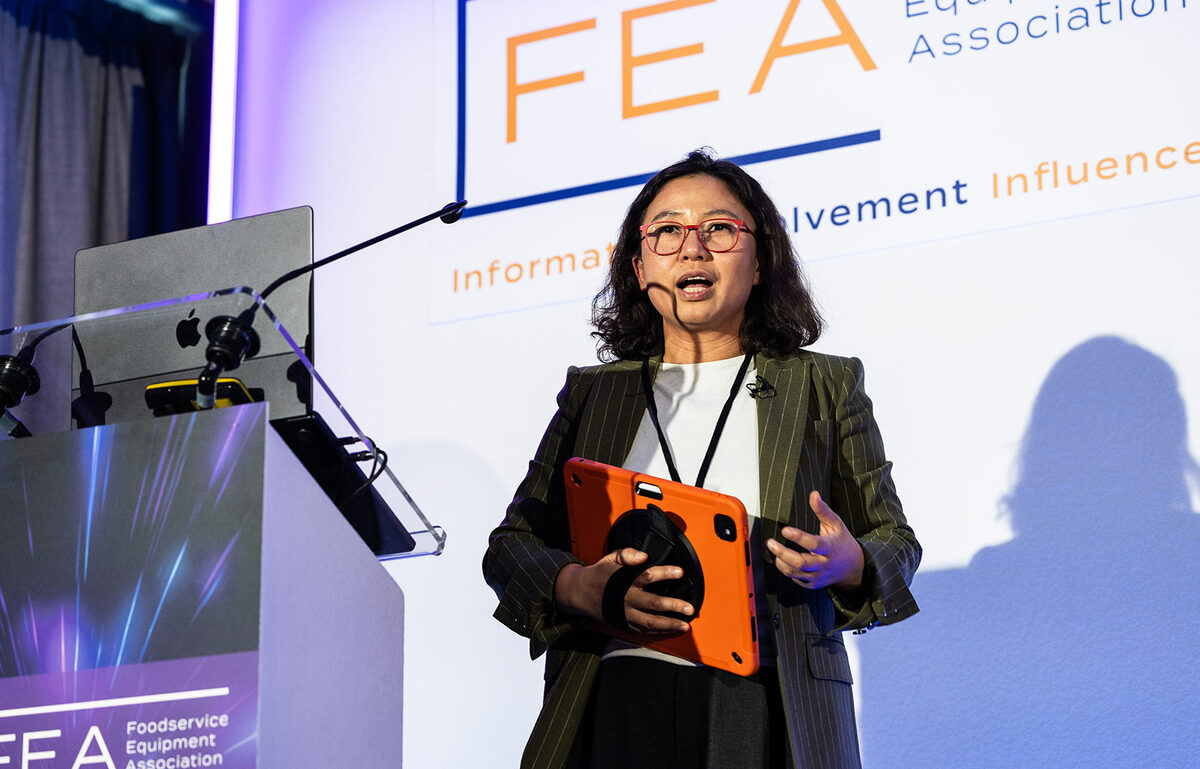
It’s best to be incremental when incorporating AI into your hospitality business, said Chang Ge, senior fellow at the University of Lincoln and director of the CG Vision Consultancy. “Think big but start small in a step-by-step way,” she said.
Emanuela Delgado, group vice-president of growth and innovation at catering equipment spares supplier Parts Town, agreed: “AI doesn’t have to be about large initiatives. I would encourage everyone to start on a small scale in a safe way and then you learn. As AI advances so quickly, we learned that we have to build modular systems that can be easily changed.”
Parts Town has been testing AI-powered technology, such as a parts predictor to help with parts identification and a sentiment analysis program that looks at customer interactions. “Even the pace of how you speak impacts conversion rates,” said Delgado.
Get AI buy-in across your business
Davies advised that all business should have an AI policy and a team looking at how to make the most of it. Ge added that companies should nominate an AI champion, as well as identifying risks and how to mitigate them at different levels.
Delgado encouraged businesses to “build trust and awareness of AI in your team, provide guidance and education so people feel comfortable”, underlining that taking it on requires clean, accurate, structured data and continuous training.
However, Davies cautioned: “Just because you can use AI doesn’t mean that you necessarily should. Fundamentally it has to deliver on a need – is it helping you close more business?”
FEA to boost the pipeline of young industry talent
The FEA is launching its Next Gen initiative to attract young talent into the catering equipment sector. Next Gen will comprise a series of initiatives designed to engage students and build career pathways, including offering a careers pack to help FEA members to work with local schools, colleges and training providers. The FEA will create an online careers hub with information on careers, training and professional development.
About the Foodservice Equipment Association
The FEA is the independent voice of the foodservice equipment industry, representing nearly 200 companies who supply, service and maintain all types of commercial catering equipment.





Most Popular


Best Places to Work in Hospitality 2026
 Wed Feb 4, 2026
Webinar: AI - building trust in the workplace
Wed Feb 18, 2026
The Caterer Supplier Awards
Thu Apr 16, 2026
The Acorn Awards 2026
Sun Jun 7, 2026


The Caterer provides trusted hospitality news, analysis and trends for restaurants, hotels and catering professionals.

Jacobs Media is a company registered in England and Wales, company number 08713328. 3rd Floor, 52 Grosvenor Gardens, London SW1W 0AU.
© 2026 Jacobs Media
