


 Menu
Menu


‘Every pound spent will need to be maximised or eliminated’: Business leaders predict a bumpy ride for 2025
Pessimism has suffused the industry, with business leaders braced for a challenging year battered by extra costs
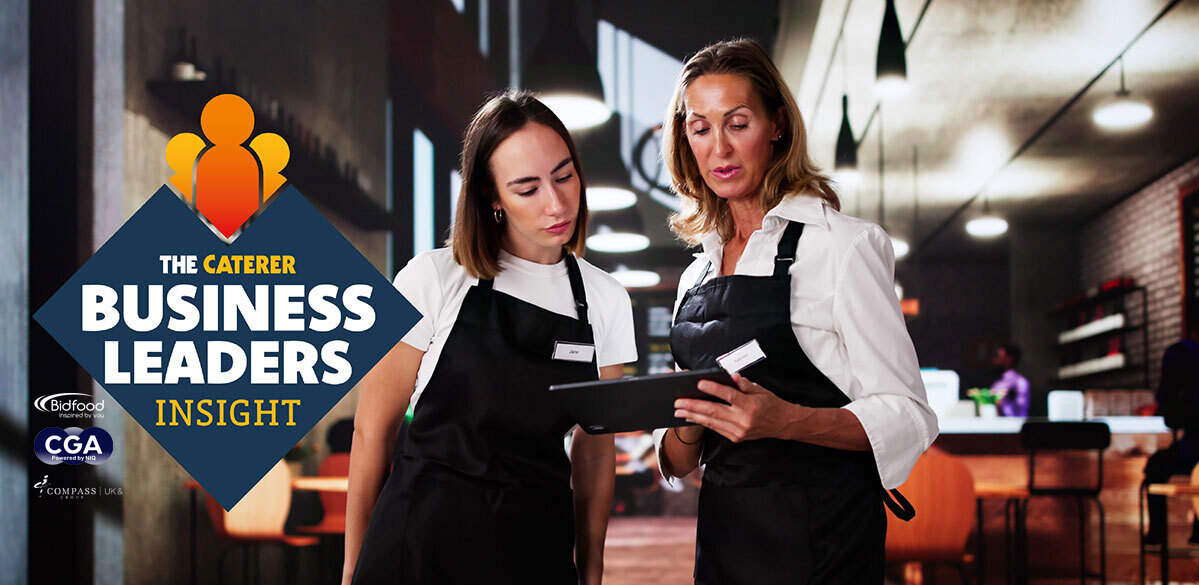
The past 18 months have seen a sharp decline in optimism among hospitality leaders, with the cost of labour and signs of consumers reining in spending among the challenges concerning operators.
The Hospitality Business Leader Survey 2025, produced by The Caterer and CGA by NIQ, sponsored by Bidfood and Compass Group, has exposed a 10% dip in optimism in the hospitality sector’s outlook, when compared to last year.
Of the operators who took part in the survey in April 2025, just 3% said they were “very optimistic” about the industry’s fortunes, with a further 30% describing themselves as “fairly optimistic”. At the time of the previous survey, 5% had felt very optimistic and 39% fairly optimistic. A further 35% of respondents said they were feeling “fairly pessimistic” and 5% “very pessimistic”, compared to 19% and 2% respectively in the last business leaders survey.
A challenging year
The results will come as a shock to few, with the industry’s brightest lights among those opening up about the challenges they’re facing. Tom Kerridge told The Guardian this month that he’s “never known fear like [that being felt in the industry currently]”.
He also acknowledged that of his six restaurants, just three were operating at a small profit, two were breaking even and one was losing “a lot of money”.
That same day Michel Roux issued a warning in The Times, saying: “There are going to be a lot more closures, and well-known high-end ones too.”
Reuben Pullan, senior insight consultant at CGA by NIQ, says: “The headline decline of business leaders’ confidence in the market of 10%, and the 19% rise in pessimism, is a stark warning that 2025 is expected to be a challenging year.
“The greatest perceived challenge for the next 12 months is government policy, which concerns almost all respondents to some degree, and within which 62% say they are very concerned about changes to employer National Insurance Contribution [NIC] thresholds.
“This is more than double the numbers who were very concerned by product inflation (26%), the cost of living crisis (25%) and energy costs (24%), which have already eroded margins in recent years.
“With tight financial room to manoeuvre, the industry response is limited, but the workforce is most likely to see the impacts of cost-saving efforts.”
You have viewed all of your 2 articles as an unregistered user
To continue reading register for free, or if you're already a member login below








More from The Caterer
Most Popular


The Acorn Awards 2026
 Sun Jun 7, 2026
The Cateys 2026
Tue Jul 7, 2026
Natural & Organic Food Show
Wed Sep 16, 2026 ExCel London
Artisan Food & Drink Show
Wed Sep 16, 2026ExCel London


The Caterer provides trusted hospitality news, analysis and trends for restaurants, hotels and catering professionals.

Jacobs Media is a company registered in England and Wales, company number 08713328. 3rd Floor, 52 Grosvenor Gardens, London SW1W 0AU.
© 2026 Jacobs Media
