


 Menu
Menu


The foodservice technology conundrum: Balancing human interaction with a frictionless experience
Operators are in the ideal position to automate customer interactions for the sake of speed and convenience, but they are keen to do so while empowering human engagement, according to new research
Foodservice operators are locked in an ongoing debate about how to use technology. On the one hand there is a strong desire to offer a technology-powered, frictionless experience, such as speedy no-contact payments, while on the other, human interaction is still felt to be the most important aspect of serving customers.
Research undertaken by The Caterer in partnership with hospitality technology supplier Lolly has backed this up. Just 6.3% of respondents say that frictionless transactions are most important in a foodservice business, and 5.6% say personal service wins – whereas a hefty 48.6% of respondents say they believe the future is an even split between the two scenarios.
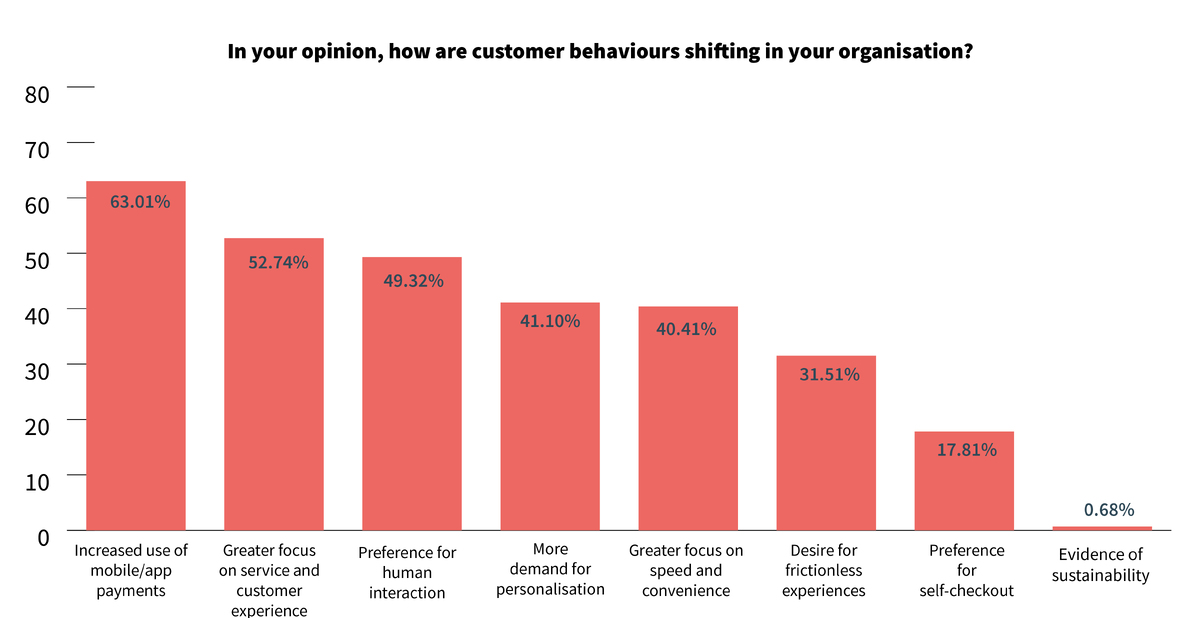
Digging deeper, 63% of respondents want to use mobile and apps for payments and 17.8% desire self-checkouts, but this sits alongside the 49.3% who still suggest that their customers have a preference for human interaction.
Peter Moore, founder and chief executive of Lolly, says striking a balance between the two is a challenge and one that depends on the environment and the type of customer: “Technology is not about the delivery, it’s about the customers who use it. Younger people are more likely to embrace tech, but Gen X is more conservative about technology.”
He points out that in certain environments customers want the likes of digital signage and menu boards, but in fine dining there is still the expectation that a waiter will serve diners. However, even here there is still a place for technology, unseen and running in the back office, helping with tasks such as inventory and recipe management.
Raj Jeyaratnam, digital and transformation director at caterer Compass Group UK & Ireland, says high-volume environments are where frictionless technology shines: “Speed and simplicity are key, for example on the concourse of a cricket or football stadium or within a healthcare environment, where people need access to food and drink 24 hours a day.”
The personal touch
So how can caterers still keep the human touch? According to Svilen Boyadzhiev, head of customer technology at Elior UK, it’s in the style of service: “We integrate digital ordering, cashless payments and smart kiosks alongside highly trained teams who deliver warmth and attentiveness. Our strategy ensures that technology enhances rather than replaces the human element, allowing us to offer convenience without compromising the human interaction.”
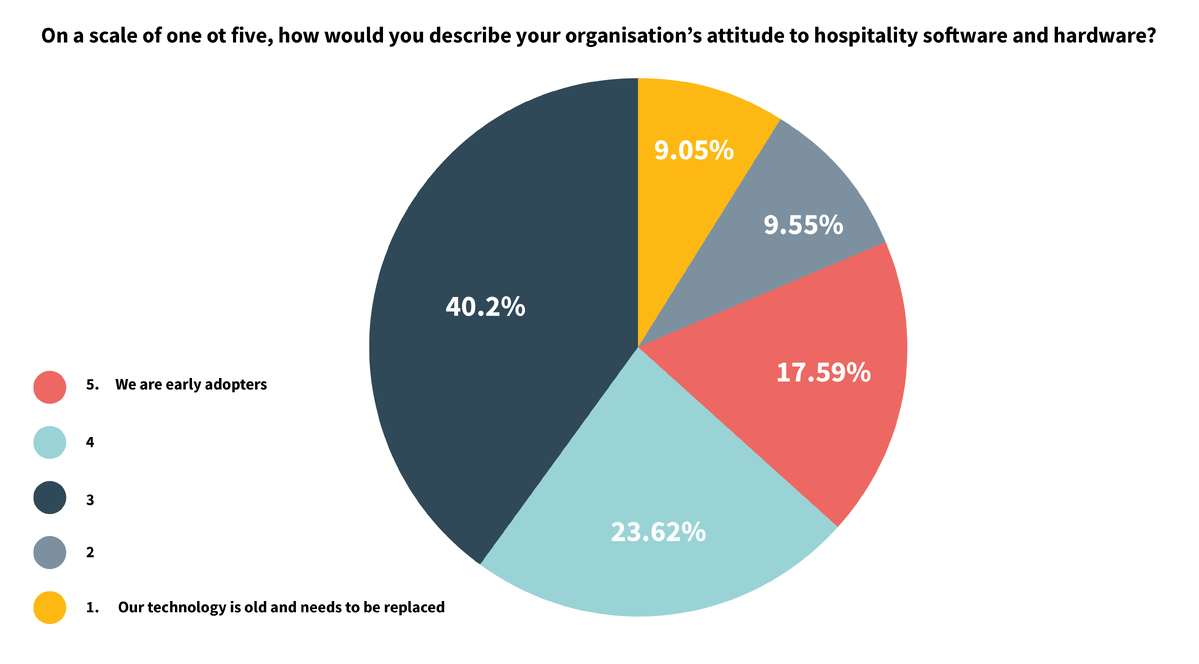
The data suggests that operators are optimistic about automation and robotics enhancing the customer experience too and, interestingly, around 40% of companies surveyed regard themselves as early adopters or open to automation, but uptake remains low due to concerns around losing the personal touch.
Boyadzhiev suggests that automation should act as an enabler, freeing teams from carrying out repetitive tasks. For example, streamlined stock management and ordering can aid back of house pressures, while self-service kiosks and mobile apps speed-up transactions front of house.
“This efficiency translates into shorter queues, faster service and more time for employees to engage with customers personally. By shifting routine tasks to technology, we are empowering our teams to elevate service standards and deliver experiences that feel both seamless and human,” he explains.
For Jeyaratnam, automation helps Compass take care of some of the “invisible tasks, but those that are very time-consuming”, such as labour scheduling, inventory and menu management. Likewise at Elior, streamlined menu management is regarded as one of the most powerful tools, as it enables instant updates across multiple sites, adding new dishes, allergen information and pricing adjustments across multiple channels simultaneously.
AI is another technology that will be playing an increasing role and there will be a growing focus at Compass to use it to help automate some tasks, Jeyaratnam says: “As our business grows, this is an opportunity to scale up using technology, to support our people to do their jobs as effectively as possible.”
Smart thinking front of house
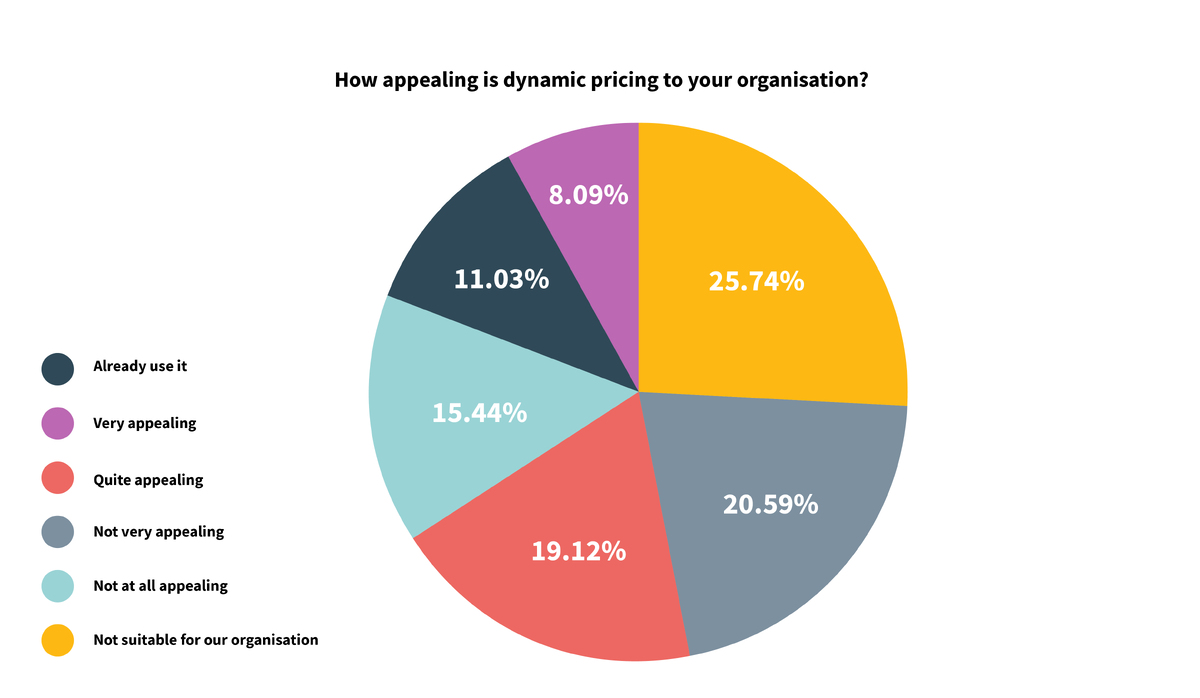
While technology adoption is already high in back-office areas, such as inventory, signage and pricing, there is growing scope for front of house innovation, such as facial recognition and using data to create hyper-personalised service, which can range from recalling a previous meal choice to someone’s name. As many as 66.4% of respondents were positive about the use of smart technology for delivering personalised experiences, 72.3% would consider it, and only a minimum had concerns, which they say are manageable.
Boyadzhiev says: “While we are exploring emerging technologies, such as facial recognition and hyper-personalisation, our focus is on scalable solutions, such as mobile ordering, loyalty apps and data-driven menu optimisation. These tools allow us to personalise offers and streamline service.”
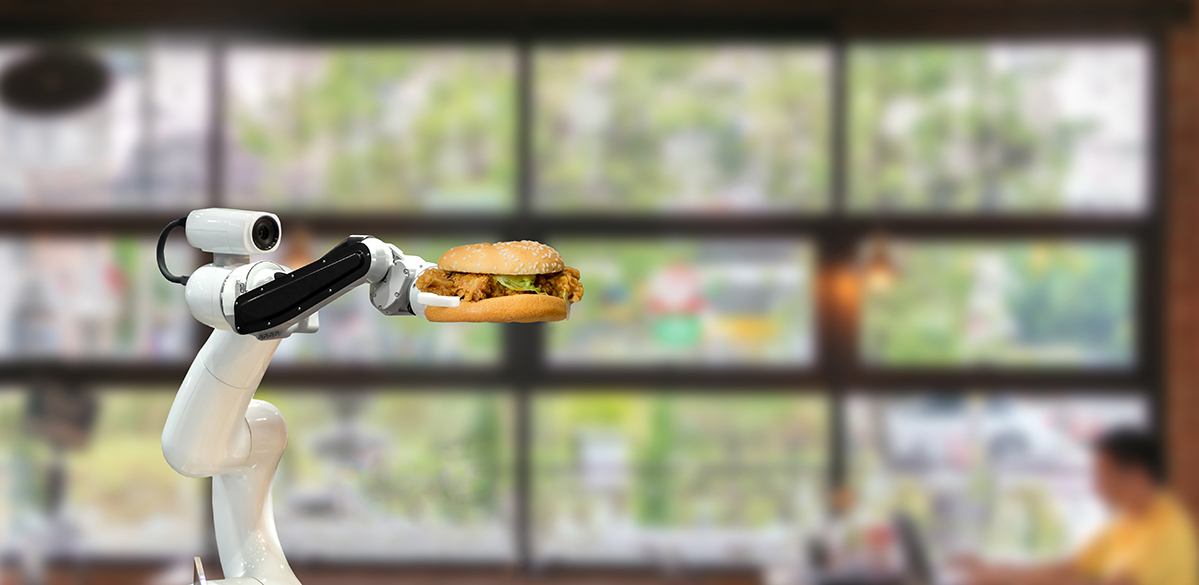
Robotics is another emerging front of house technology that is expected to play a far greater role over the next five years or so as new capabilities mature. Although early models were often viewed as gimmicks, operators are increasingly recognising a practical application. The research showed that some 14% of respondents are already exploring robotics, with another 41% open to adoption.
Compass deploys robotics across a number of venues, including at several further education campuses, undertaking tasks such as delivery of food to tables using Lolly Nova foodservice robots. The caterer has seen encouraging results and clear operational benefits, and is considering expanding their use across more outlets.
Let’s get personal
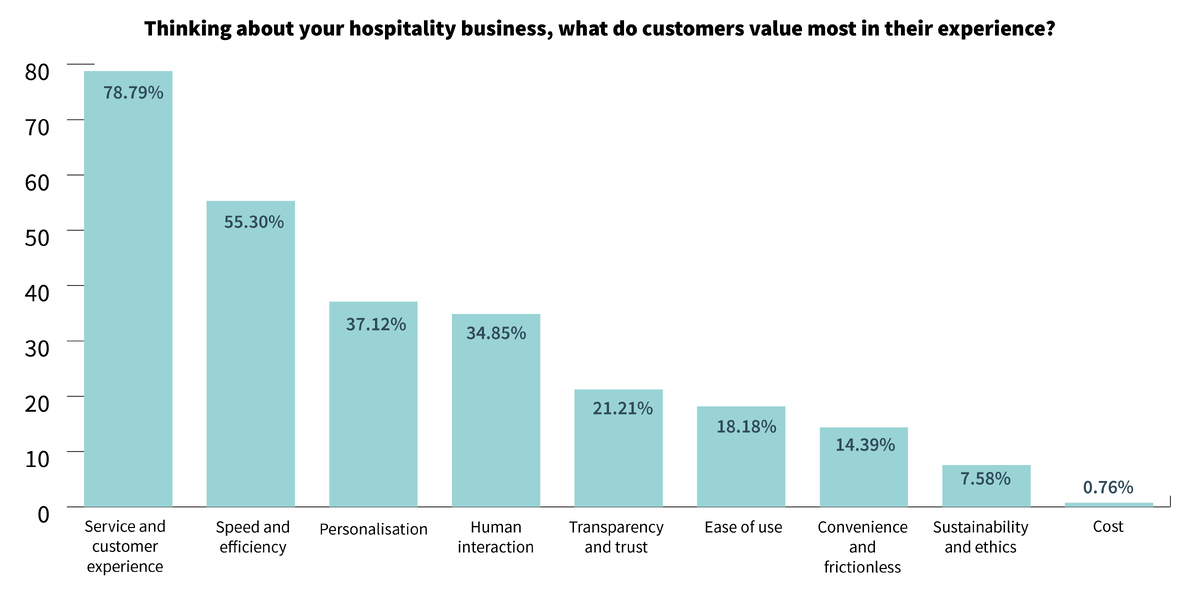
Where there is great demand among operators for technology, it’s for personalised experiences. Forty-one per cent cited personalisation as one of their top three most-valued experiences and 52% say they want technology to offer a greater focus on service.
Boyadzhiev says the likes of self-service ordering and cashless systems free up Elior’s teams to take on the personalisation aspect themselves. “This approach ensures employees have the time and energy to personalise interactions – whether that is remembering a regular customer’s preferences or offering tailored recommendations, making technology a silent partner,” he says.
Compass is very much on the journey of personalising the experience it delivers to its many and varied customers, which it serves across multiple sectors. It is using both its own omni-channel, ‘Time to Eat’ Point-of-Sale (PoS) platform and solutions from Lolly, such as its app, which uses data to tailor customer interactions. “When this was talked about in the past it was about segmenting customers, but we can now do personal offers dedicated to one individual,” says Jeyaratnam.
The loyalty aspect of the Lolly app can be tailored for each hospitality environment. For example, it can incentivise people into making healthier choices through targeted rewards and promotions.
Jeyaratnam says Compass is close to completing a new solution that lets non-technical staff, including chefs and managers, analyse data in natural language. “We’re piloting it with finance teams using finance data, and will broaden its use once the development phase is complete. The data flows into our warehouse and is presented through dashboards that AI can then query,’ he explains.
Data equals customer knowledge
Data is at the heart of all these personalisation initiatives. More than 80% of operators recognise data metrics as valuable, but few are using them to full effect, according to Moore, who says the opportunity lies in connecting real-time data to decision-making, enabling predictive insights, smarter stock control and customer personalisation. Smart analytics can turn data into service value.
An ability to analyse the data by smaller companies is a new capability: “Data analysis was expensive and so was only done by large organisations, but AI has changed all that. In the past 12 months there have been scores of AI tools for early adopters,” he says.
Boyadzhiev recognises that data is “central to our strategy, informing everything from menu development to customer engagement”. He adds: “We analyse purchasing patterns, peak times and feedback to optimise menus and staffing. While personalisation is still in its early stages, we are building capabilities to deliver tailored promotions and recommendations through digital platforms. Our plans include leveraging predictive analytics and AI to create hyper-relevant experiences, ensuring data moves beyond operational efficiency to genuine customer delight.”
Moore believes that hospitality operators should assess what returns they need from technology and invest accordingly: “You have got to embrace it. Tech is moving fast and if you don’t embrace it in some form, you will be left behind. You need to work out the blend of software, AI and data that gives you the most value.”
About Lolly
Lolly is redefining hospitality through smart, cutting-edge technology. From advanced EPoS systems to autonomous robots, our innovative solutions are built to boost efficiency, drive profitability, and scale with your business. Powered by AI, our flexible platform adapts to your unique needs, making complex tech simple, accessible, and agile. With an award-winning, innovative guest experience at the heart of everything we do, we help you deliver seamless service that delights customers.

Photo: kung_tom/Shutterstock






Most Popular






Best Places to Work in Hospitality 2026
 Wed Feb 4, 2026
Webinar: AI - building trust in the workplace
Wed Feb 18, 2026
The Caterer Supplier Awards
Thu Apr 16, 2026
The Acorn Awards 2026
Sun Jun 7, 2026


The Caterer provides trusted hospitality news, analysis and trends for restaurants, hotels and catering professionals.

Jacobs Media is a company registered in England and Wales, company number 08713328. 3rd Floor, 52 Grosvenor Gardens, London SW1W 0AU.
© 2026 Jacobs Media
