



 Menu
Menu


Cold-water prawn and alternative species could temper high fish costs
The 2026 Norway–UK Seafood Summit saw advice for operators on meeting pricing challenges

A new industry report presented at the 2026 Norway–UK Seafood Summit positions cold-water prawns as an under-leveraged opportunity for the UK out-of-home sector.
The Norwegian Seafood Council teamed up with research firm CGA for the Prawns in the UK Market Report 2026, which found that as quick-service restaurants currently dominate prawn servings, full-service restaurants and pubs present untapped potential.
The research identified commercial headroom for operators open to innovation and rethinking their food offering, with prawns accounting for 9.4% of all seafood servings – close to 100m servings in 2024, a year-on-year increase of more than 19%.
The report also highlighted structural challenges within the warm-water prawn market – including high pricing, tariff pressures, sustainability concerns and supply chain volatility that are prompting operators to reassess sourcing strategies.
One restaurant manager at a small full-service site said: “Flavoured cold-water prawns or ready-made prawn dishes are appealing, as long as they come at a sensible price point.”
The research analysed wholesaler data and found that most prawns are sold under £25/kg. However, cold-water prawns are under-represented in the highest price point, above £35.
The Prawns in the UK Market Report also pointed to cold-water prawns’ strengths in taste, texture, provenance and sustainability and that they could be a versatile option which works across formats ranging from food-to-go and convenience to sushi, pasta and family-friendly dishes.
A head chef at a medium-sized full-service restaurant told researchers: “Cold-water prawns are more popular than warm-water prawns amongst customers.”
Seafood from Norway’s report concludes that smaller pack sizes, uncooked formats and more competitive wholesale listings could unlock further growth, enabling operators to capitalise on rising demand while building more sustainable and profitable prawn menus.
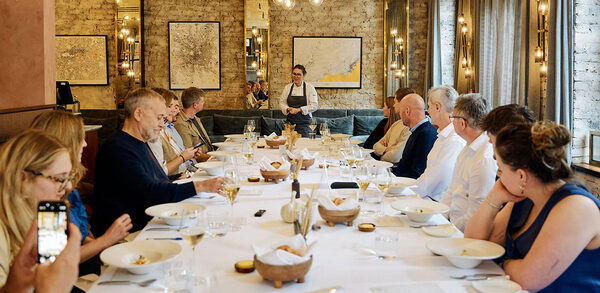
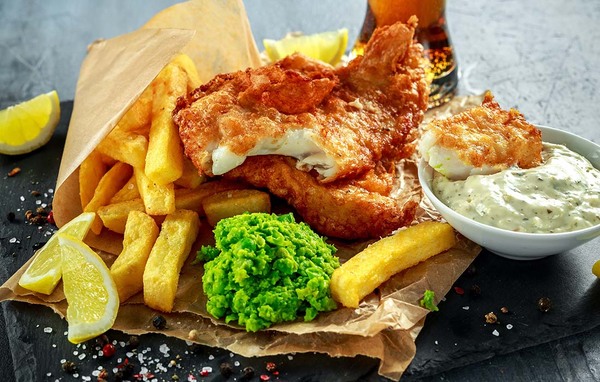
Meanwhile, the 2026 Norway–UK Seafood Summit, held on 24 February at London’s Fishmonger’s Hall, also saw Johan Oksholen, sales manager at Norwegian seafood exporter Nor Seafoods advise operators to look into serving alternative fish species like hake, pollock and saithe in addition to cod, with reduced quotas of the fish and chip favourite pushing prices to record highs.
“Portion sizes and lunch deals are increasingly important,” he added.
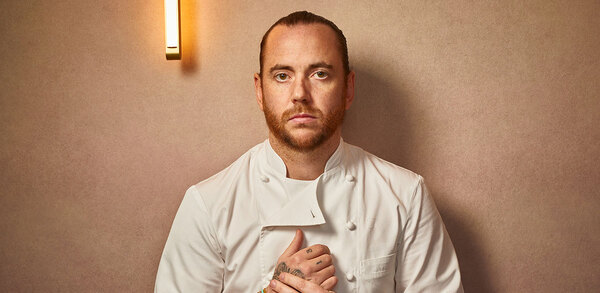
Chef Michel Roux Jr agreed during his interview at the event: “We need to find these species switches. Why not use gurnard? It’s a beautiful fish, tender and meaty. Or pouting, which is delicate and fragile. We need to be more creative with species and there should be nothing going into the bin.”
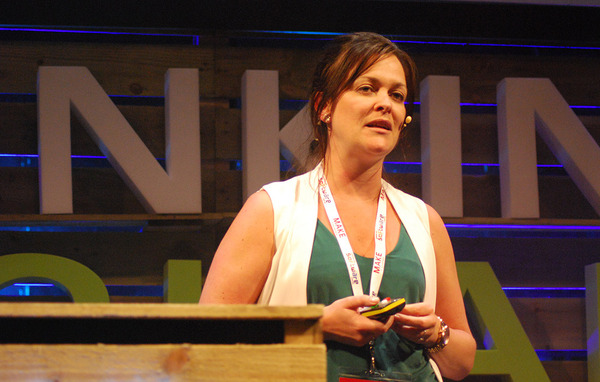
Rosie Welch, chef director at event caterer From the Woods, added: "We should be looking at waste differently. We turn our seafood waste into lots of products used elsewhere on menu – we can dehydrate fish, all trim can be used for mousse and bones are for stock.”
Subsequently, Galton Blackiston, chef proprietor at seafood restaurant No.1 Cromer cited Norcod’s Snowcod farmed fish as a possible solution to a stretched cod supply. Earlier in the day, Norcod’s CEO Christian Riber underlined to delegates his farmed cod’s stable pricing and supply, delivered fresh within 2-3 days, with his company aiming to scale production to reach 25,000 tonnes annually by 2029.
Blackiston also added: “Cod prices in shop will go off the scale unless something happens. We have to look at other ways of doing things, and technology is part of the solution.
“There will be supply peaks and troughs, just source the best you can and serve it as cheaply as you can.”
Haddock supply could be coming out of a trough, with Norwegian Seafood Council’s seafood analyst Eivind Braekkan predicting a 4% increase this year, with Atlantic salmon expected to rise by 2% globally in the same period.
However, he forecast cod to have the lowest global supply since WW2, with a 7% drop forecast for 2026.









More from The Caterer

Most Popular






HRC
 Mon Mar 30, 2026
 ExCel London
The Caterer Supplier Awards
Thu Apr 16, 2026
The Caterer People Summit 2026
Thu May 14, 202658VE, London
The Acorn Awards 2026
Sun Jun 7, 2026


The Caterer provides trusted hospitality news, analysis and trends for restaurants, hotels and catering professionals.

Jacobs Media is a company registered in England and Wales, company number 08713328. 3rd Floor, 52 Grosvenor Gardens, London SW1W 0AU.
© 2026 Jacobs Media
