



 Menu
Menu


Regeneration nation: What does eco-flour mean for the bakery sector?
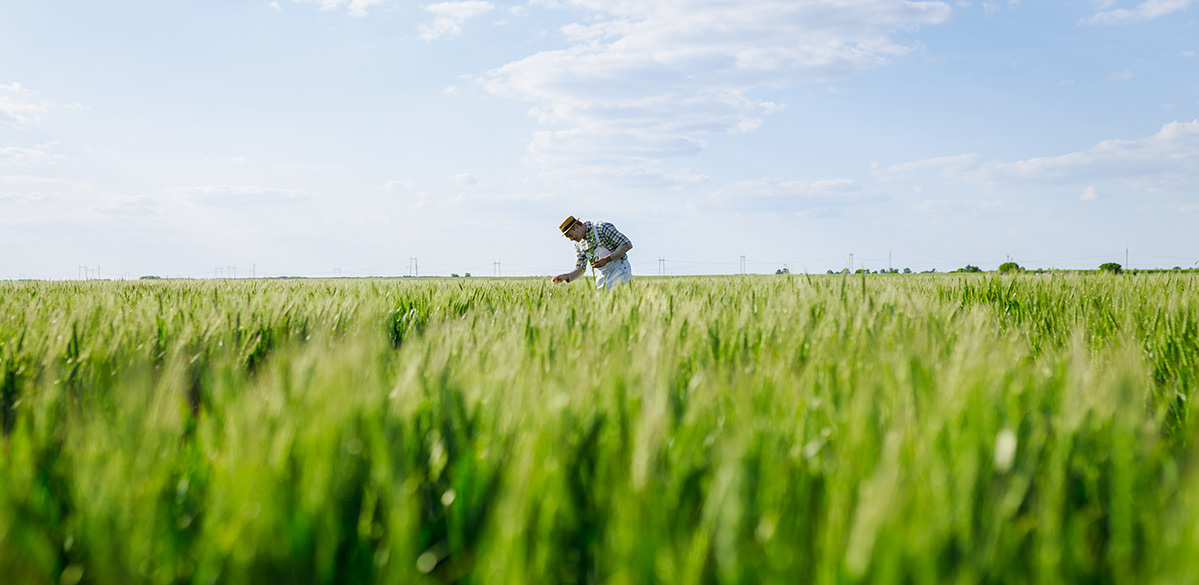
There are only a handful of suppliers using regenerative flour, but traceability and sustainability may soon become the most important ingredients in baking
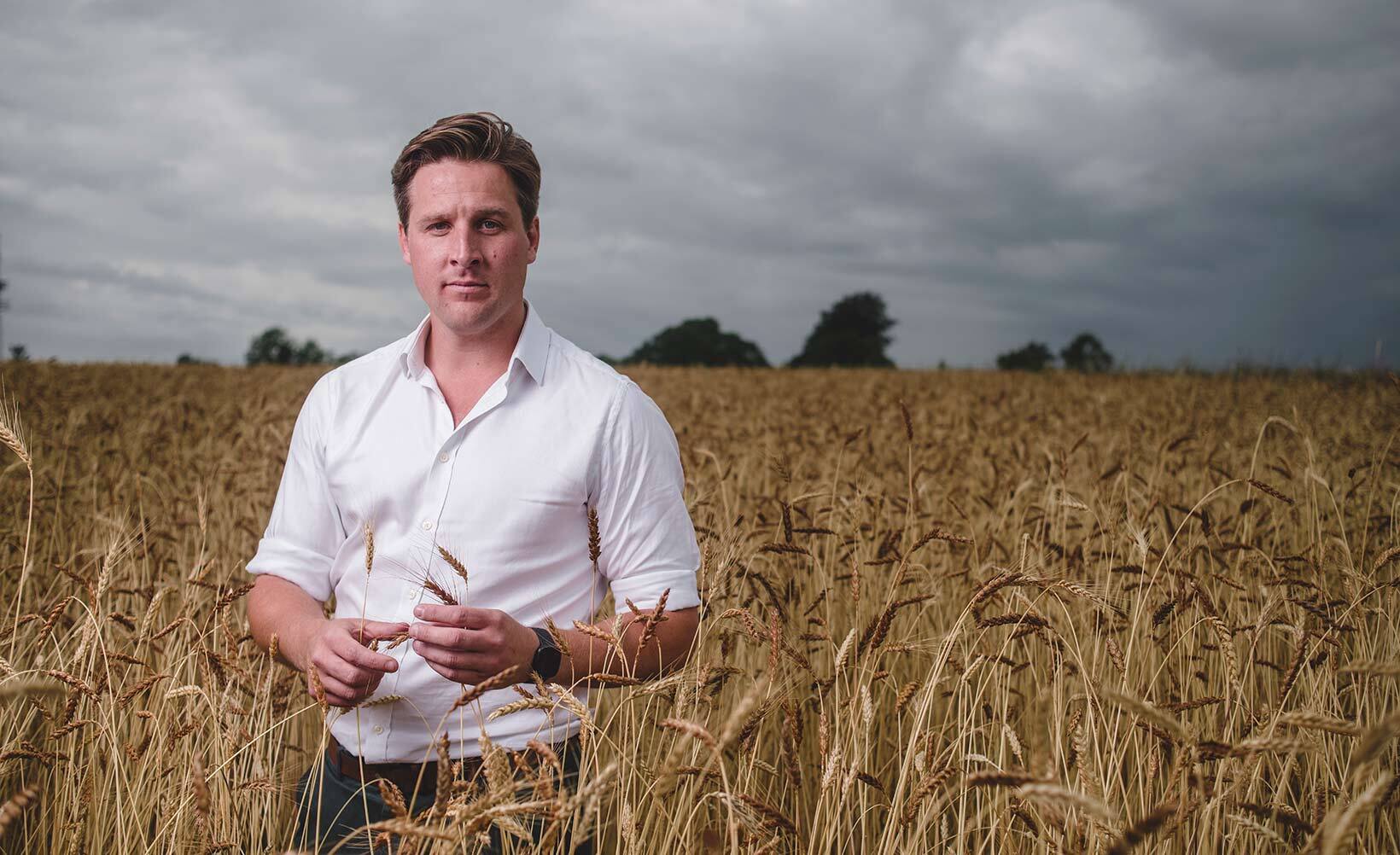
When Bertie Matthews joined his family flour firm, Matthews Cotswold Flour, located in Chipping Norton in Oxfordshire, he was keen to introduce an ethical component. “I came in thinking: we’re a flour mill, but what’s our purpose? How will we deal with farmers?” he says.
The answer came from a close neighbour – who was also a Catey award winner in 2025. “We’re close to an organisation called FarmEd, which is run by Ian Wilkinson, and he introduced us to regenerative farming. So that been the centre of our approach since 2018: to produce food without degrading the system, the soil and the water and the biodiversity.”
Around 35% of the flour the company produces is now regeneratively grown, from a standing start when Matthews joined the company. And it has become part of a growing global movement that includes businesses such as Honest Burgers, which uses regenerative meat for its burgers, and organic dairy producer Yeo Valley, which is an advocate for regenerative farming for its suppliers.
Matthews was a very early adopter and few people have a better idea of the possibilities and pitfalls of regenerative farming – or regen, for short – than he does. So what does the rise of regen mean for bakery operators?
Regen men
Matthews is an evangelist for regen but even he admits that, in terms of flavour, the benefits are not obvious. However, he adds, sustainable practices do have consequences that are good news for producers. “It’s very hard to prove that you get a different flavour,” he says, “But we are seeing that yield is more stable, meaning you’re less likely to have wild price fluctuations – and quality is more stable too.
“That consistency is crucial to, for example, bakers or pizza makers – when it comes to the stretch of the dough or the absorption of the flour. We’re seeing that with our products.”
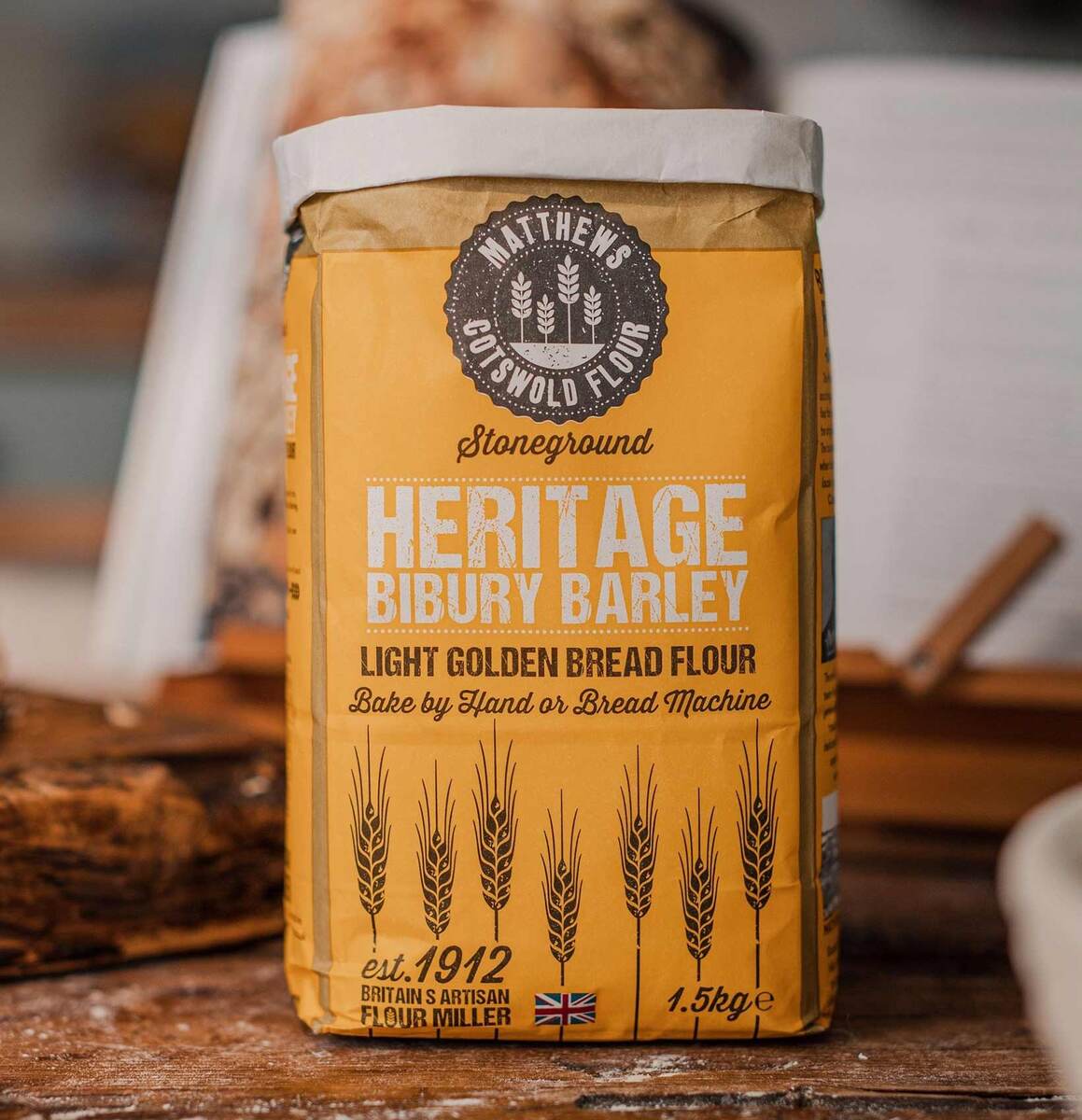
Matthews Cotswold Flour produces a variety of regen products, from spelt flour to traditional white strong bread flour, and Matthews says the story behind this flour is compelling for operators and customers alike.
“The traceability and the connection to the grower is what really sparks [people’s] interest,” he says, “We talk about the system and how it works and people can see the impact it has. Sometimes we bring people to the farms, so they can see it for themselves. We dig a spade into the soil and they can see the greater density, the worm count – they can see it and smell it.”
“We talk about the system and how it works and people can see the impact it has”
It’s a story that could be useful in terms of selling products made with the flour, which, Matthew admits, does have a slight price premium – “because we’re paying the farmer a premium”.

Seven Seeded pistachio pain au chocolat
He says: “From 2020 to today, we’ve gone from little to no [public] understanding of regen farming to people having some idea, but there’s a lot more work to be done.”
One company that is using regen flour is Hertfordshire bakery Seven Seeded. “Our sourdough and viennoiserie are built on regenerative flours and carefully sourced dairy and chocolate, which is why we’re trusted by Michelin-starred restaurants and leading cafés across London,” says Seven Seeded’s CEO and owner, David Dwek. “Since 2021, we’ve grown sixfold while maintaining 99.8% fulfilment, proving that operational discipline and artisanal standards can coexist when you obsess over the details.”
This augurs well for those investing in regen farming, like Matthews, who says his aim is to get to 100% regeneratively produced flour. “The future for us is clear,” he says. “We want to have all of our flour come from a certified regen system, where we can tangibly prove the benefits that are happening on the farm. And, long term, the goal for regen farming should be that it’s just farming – that’s how you farm.”
What’s new on the bakery market
Bridor has produced a larger croissant format that can help operators tap into the trend for the ‘crodwich’ – the croissant sandwich. “The Maxi Croissant’s soft centre and flaky texture make it a great sweet base for a savoury sandwich, and is therefore a unique alternative to the traditional option,” says Erwan Inizan, Bridor’s Northern Europe sales director.
“Research has found that 71% of Europeans would like to eat savoury sandwiches made with croissants and savoury pastries are now the second fastest-growing food-to-go types by volume sales.”
“Sandwiches offer the perfect opportunity to get creative and adventurous,” says Stéphanie Brillouet, marketing and innovation director, Délifrance. “World cuisine is an almost endless source of ideas. Consider the classics such as a French croque monsieur, or a US-inspired bagel layered with a variety of fillings, or a Vietnamese style bánh mì – a crunchy baguette with marinated meat or tofu and pickled vegetables – or a focaccia caprese with mozzarella, tomato and basil.”
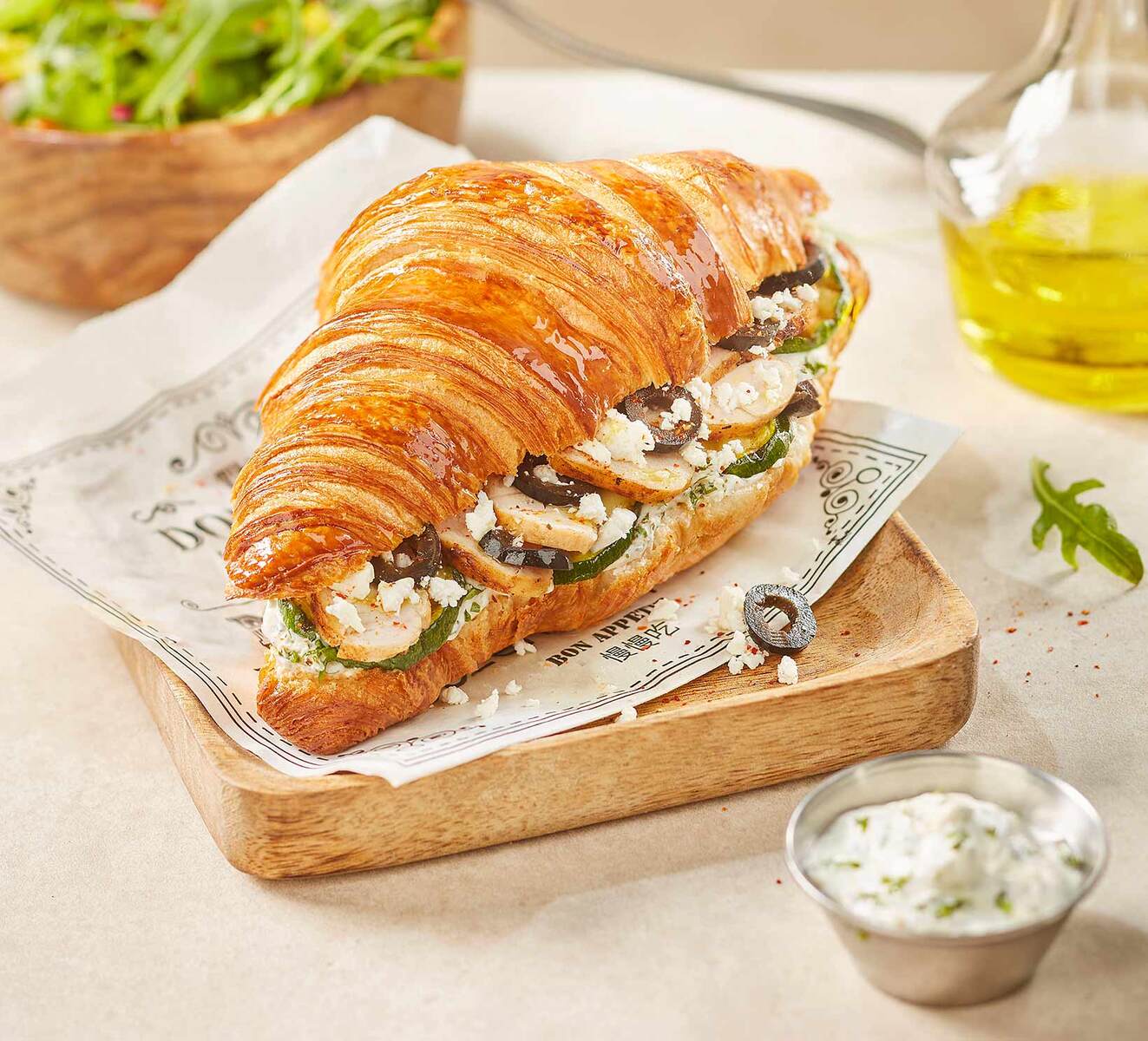
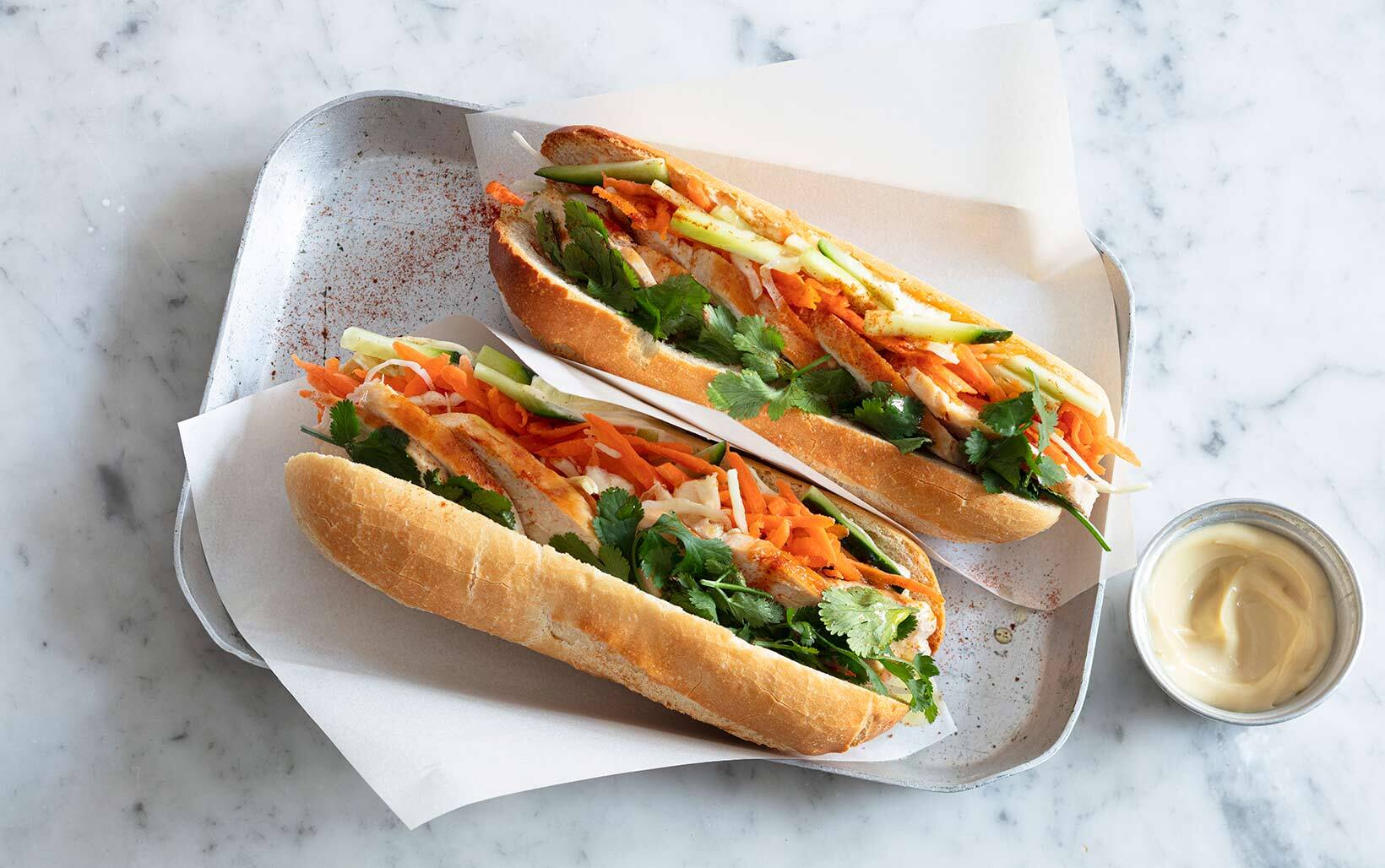
Italian options remain hugely popular. “Our Pane Arte breads are new to the market and are designed to meet demand for authentic, artisan-style breads within catering operations,” says Rebecca Calveley, trade marketing manager for La Lorraine Bakery Group, which includes the Panesco, Donut Worry Be Happy and La Lorraine brands. “Available in three different formats – Cereali, Rosmarino and Rosa – this trio of Italian-inspired breads achieve quality and distinction through long resting and fermentation times.”
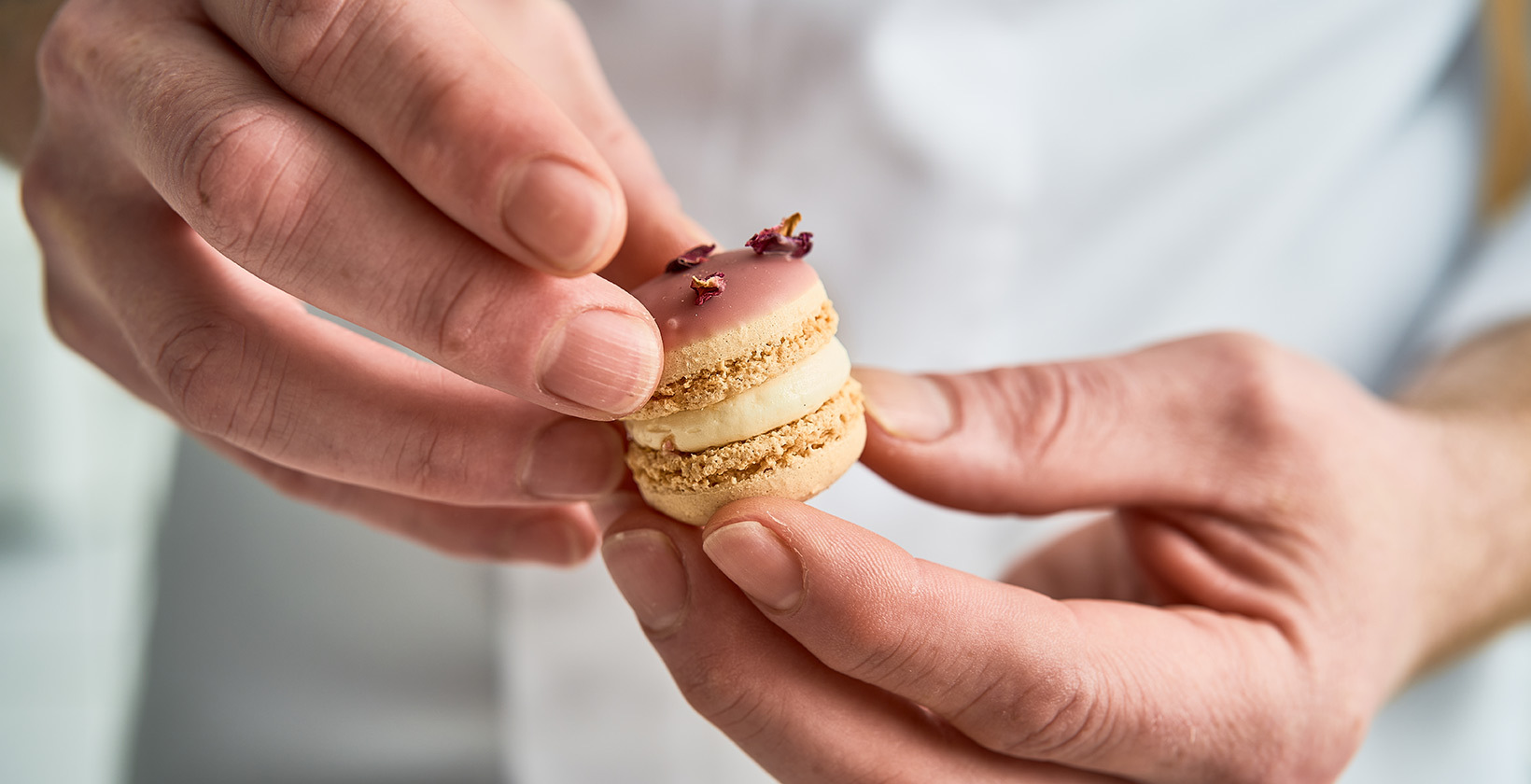
Pidy, meanwhile, offers a portfolio of pastry cases, sponge cakes and sheets, and specialist products such as macarons, babas and meringues. The company’s large macaron shells, for example, are available in neutral, raspberry or chocolate flavours and in different sizes. “Each is compatible with a range of flavour fillings for ultimate convenience,” says Fabien Levet, commercial manager.
Danish pastries are another tried-and-trusted option, according to Lantmännen Unibake’s marketing manager Samantha Winsor. “Premium offerings are particularly resonating because they offer indulgence that feels both special and accessible, allowing operators to trade up without overcomplicating menus,” she says. “Pastries that highlight ingredient provenance, on-trend flavours and strong visual appeal help to elevate perceptions of quality and value, which is increasingly important as operators look to justify price points.”
Suppliers
Bridor www.bridor.com/en-uk
Délifrance delifrance.com/uk
La Lorraine Bakery Group llbg.com/en-EU
Lantmännen Unibake www.lantmannenunibake.com
Matthews Cotswold Flour cotswoldflour.com
Pidy www.pidy.com/uk
Seven Seeded sevenseeded.co.uk
Main image: Zoran Zeremski/Shutterstock





More from The Caterer
Most Popular




The Caterer People Summit 2026
 Thu May 14, 2026
 The Line, London
The Acorn Awards 2026
Sun Jun 7, 2026
The Cateys 2026
Tue Jul 7, 2026
Natural & Organic Food Show
Wed Sep 16, 2026ExCel London


The Caterer provides trusted hospitality news, analysis and trends for restaurants, hotels and catering professionals.

Jacobs Media is a company registered in England and Wales, company number 08713328. 3rd Floor, 52 Grosvenor Gardens, London SW1W 0AU.
© 2026 Jacobs Media
