



 Menu
Menu


Diners on weight loss drugs want ‘flexibility rather than three-course menus’
According to research from KAM Insight, roughly a third of people on weight loss drugs are dining out less frequently

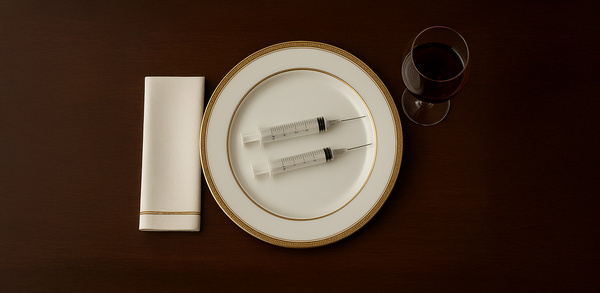
Restaurants may need to start offering smaller portions and place less of an emphasis on set menus amid the rising use of weight loss drugs.
Katie Jenkins, marketing and partnerships director at hospitality research firm KAM, urged industry leaders attending the UKHospitality ‘Serving Britain: The Future of Food’ conference in London to consider the impact of appetite-shrinking drugs on menus.
Weight loss drugs, such as Ozempic, Wegovy and Mounjaro, contain glucagon-like peptide-1 (GLP-1), which was originally used to treat Type 2 diabetes.
A weekly injection of the substance mimics the natural GLP-1 hormone, leading to longer feelings of fullness, slower digestion and smaller appetites.
“The number of users [of weight loss drugs] is only going to grow. I’m absolutely confident it will impact our industry, so we need to put it into food menu strategies going forward. We want to put this discussion on the table. The full [KAM] report on [weight loss drugs] is still being written,” she said.
According to research from KAM Insight, 32% of people on weight loss drugs are going out to eat or drink less often.
The analytics company also reported that around 4%-7% of UK adults are currently using GLP-1 drugs for weight loss, amounting to nearly 3.7 million people. The usage of these drugs across the UK has also doubled in one year.
Jenkins pointed out the proportion of those on weight loss drugs was not far from the 7% of the population who identified as vegetarian, the 3% who said they were vegan and the 1%-4% with a wheat allergy.
She said: “This is not an insignificant number, considering the amount of thought we put in to cater for vegans, vegetarians and allergy intolerances. A similar proportion of people are taking these weight loss drugs.”
Qualitative research among people on weight loss medications indicated a preference for restaurants with sharing plates, as these encourage socialising as well as eating.
“One of the big things that came out is the ability to customise dishes and portion control. A lot of this is about flexibility rather than three-course menus. People on weight loss drugs are also more happy to pay a premium for healthier, functional foods, because they are buying less volume,” Jenkins added.
Despite the increased use of weight loss drugs, the UK continues to face an obesity problem. Meanwhile, opinion remains divided over the extent to which these drugs can truly tackle obesity in the long term, due to the costs involved and the lack of studies on their side effects after many years’ use.
According to government figures, in 2022 to 2023, 64% of adults aged 18 years and over in England were estimated to be overweight or living with obesity.
Tim Doubleday, chief financial officer at Burger King, told the conference the fast food giant could not be held solely responsible for obesity in the UK.
“On average, someone will come to Burger King five times a year. How can you be responsible for the obesity problem in the UK if you have such an infrequent product? People might be having two cappuccinos a day, but they might not be having a burger every day,” he said.
Helen Lo, external affairs advisor at Whitbread, added that the definition of ultra-processed foods is “fundamental” to how businesses operate, “not just to industry but to consumers”.
Photo: Alones/Shutterstock
You have viewed all of your 2 articles as an unregistered user
To continue reading register for free, or if you're already a member login below





More from The Caterer
Most Popular



The Acorn Awards 2026
 Sun Jun 7, 2026
The Cateys 2026
Tue Jul 7, 2026
Natural & Organic Food Show
Wed Sep 16, 2026 ExCel London
Artisan Food & Drink Show
Wed Sep 16, 2026ExCel London


The Caterer provides trusted hospitality news, analysis and trends for restaurants, hotels and catering professionals.

Jacobs Media is a company registered in England and Wales, company number 08713328. 3rd Floor, 52 Grosvenor Gardens, London SW1W 0AU.
© 2026 Jacobs Media
