


 Menu
Menu


Booking tools: Tailor your tool to your guest
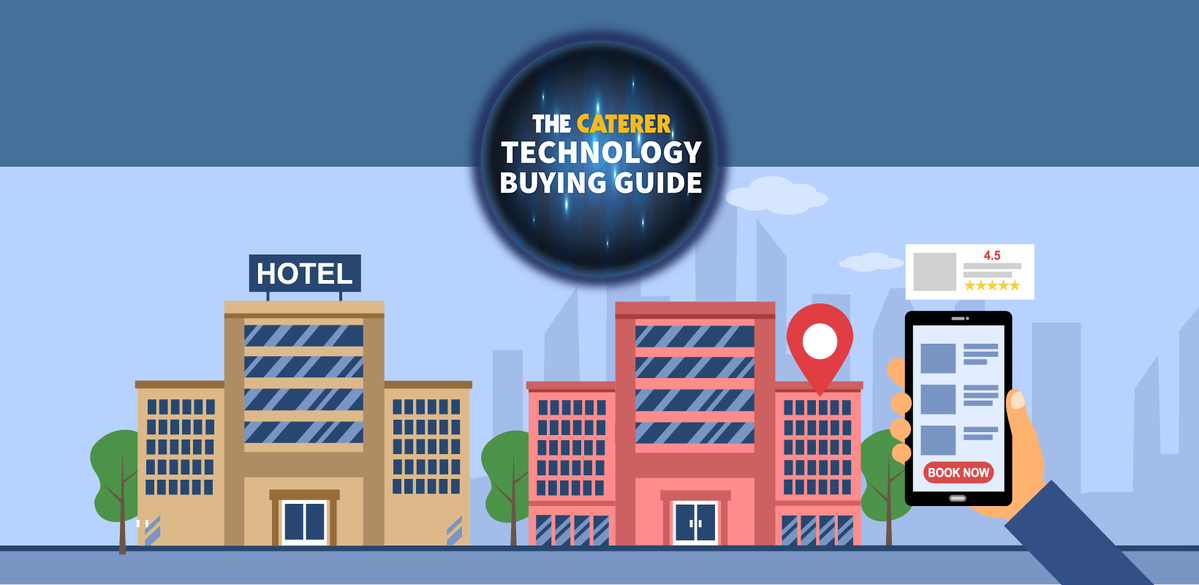
If you know what your guest is looking for when booking a hotel room or restaurant table, that’s half the battle won
Finding the right booking tool for your hospitality business could make the difference between breaking even or making a healthy profit.
When it comes to hotels, your booking tool is competing with online travel agencies (OTAs) – organisations with vast resources solely devoted to booking guests.
“OTAs will always be more convenient as a booking method, so your internet booking engine needs to look amazing and be really good at communicating the benefits of booking direct, through smart messages, rate comparisons or just great design,” says Adam Hamadache, chief executive of digital consultancy Formula.
There are a number of ways your booking tool can help you get in front of the competition. Choosing a platform that supports third-party integrations could pay dividends: “Rate comparison widgets and upsell plugins used by OTAs have proven to be incredibly valuable at delivering a demonstrable return on investment,” he adds.
Secondly, enquire about the attribution tracking credentials of a booking engine. It’s still common for some booking engines to limit attribution tracking, withholding information about where a booking has come from – paid, organic search, email, referral or direct traffic.
Thirdly, if you operate multiple hotels that are close to each other, make sure the booking engine allows the customer to search by location rather than just by individual properties. This is important in cities such as London, where tourists visiting for the first time don’t necessarily know whether they wish to stay in Notting Hill or Shoreditch.
Finally, avoid booking engines that display rate tables. “When the guest asks for a price this weekend and they’re presented with 70 different prices for this week and next across a dozen different room types, it’s confusing,” says Hamadache.
Keep price and package options concise and easy to understand – and eliminate industry jargon. “It’s not uncommon to see industry acronyms such as BAR (best available rate) appear on the customer-facing booking engine. Use as many acronyms as you wish within your property management system, but make sure the jargon stays off your booking engine,” he says.


Bespoke bookings
For restaurants, it pays to know your customer and how they have found you. Scot Turner, founder of Auden Hospitality, says: “We have a different booking system for each of the three restaurants we operate in London, because they each offer different things.”
One restaurant, Homies on Donkeys, serves modern Mexican cuisine in London’s Leytonstone and started life as a market stall. For its first two years, the restaurant had a very simple reservation system and only now, after it received a rising number of bookings through social media and the restaurant’s own website, has it moved to a full-service booking solution.
At the second, RedFarm in Covent Garden, 80% of customers are walk-ins. For this tourist-driven market, Turner deploys an international booking platform with its own network.
At Noreen in Marylebone, the booking system integrates directly with Google Reserve, which delivers one third of total bookings. Turner says: “Do not ignore the Google Reserve integration because it’s convenient for customers who find you on Google. You’ll be missing a real opportunity.”
He adds: “The real power we see is in having a reservation and an electronic point of sale (EPoS) system that talk to each other. Reservations systems push guest notes to the EPoS, which are super-helpful when you are serving them in a busy restaurant. And sending data back from the EPoS to the reservation systems is really helpful too, because we learn what they’ve ordered and what they have spent and we then add that to the guest notes.”
The Technology Buying Guide 2026
- AI: How to use artificial intelligence to take away tedious tasks
- EPoS: Ways to make your electronic payment system work for you
- Guest experience: How to make the most of the digital touchpoints
- Property management systems: A practical guide to choosing your next PMS
- Workforce management systems: Organise shifts, take care of HR and look after your staff
Sponsored content
- How hoteliers are rethinking PMS with Apaleo
- Focus Group: AI – the quiet force powering hospitality’s next leap
- Rezcontrol – the listening PMS
- Reimagining hospitality: How Shiji powers hotels day and night
- Stampede – all your guest engagement tech in one seamless platform
- Dines: The POS that chose service over bots





More from The Caterer
Most Popular




Best Places to Work in Hospitality 2026
 Wed Feb 4, 2026
Webinar: AI - building trust in the workplace
Wed Feb 18, 2026
The Caterer Supplier Awards
Thu Apr 16, 2026
The Acorn Awards 2026
Sun Jun 7, 2026


The Caterer provides trusted hospitality news, analysis and trends for restaurants, hotels and catering professionals.

Jacobs Media is a company registered in England and Wales, company number 08713328. 3rd Floor, 52 Grosvenor Gardens, London SW1W 0AU.
© 2026 Jacobs Media
