



 Menu
Menu


East London docks proposed as new location for Billingsgate and Smithfield markets
The new site in Newham is estimated to generate £750m in local expenditure and more than 2,200 jobs
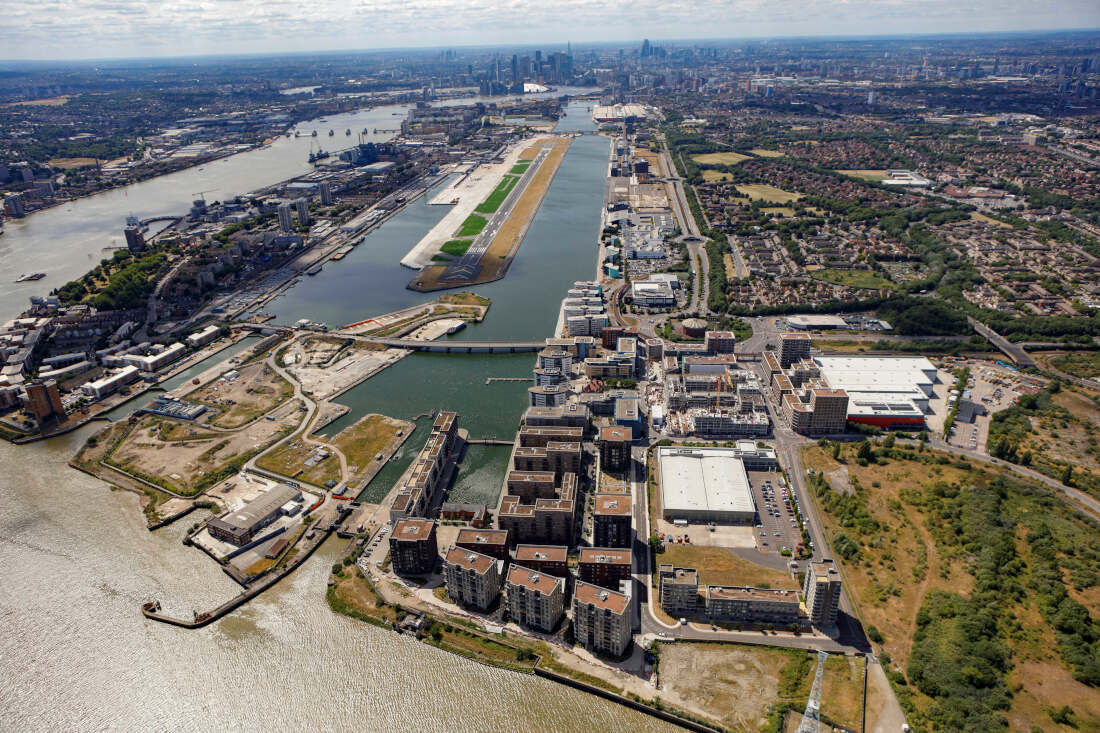
The Royal Docks in Newham, east London, could become the new site for Billingsgate and Smithfield markets.
Billingsgate and Smithfield Market Traders, the City of London Corporation and the Greater London Authority (GLA) have all proposed the relocation to the Albert Island site, which would fulfil a shared ambition to locate the fish and meat markets within the M25.
The move is subject to the successful passage of a Parliamentary Bill approving the cessation of the historic markets at their current sites: Billingsgate in Poplar and Smithfield in Farringdon.
Newham Borough Council will also need to grant planning permission for the markets.
The Royal Docks is owned by the GLA and has planning consent for around 750,000 sq ft of development.
It is estimated that a move to Albert Island would bring about £750m in local expenditure, more than 2,200 jobs and £130m gross value added to Newham; these numbers are proposed to more than double in benefits to the wider UK economy over a 30-year period.
Both markets will continue to operate their respective apprenticeship programmes – the Smithfield Apprenticeship Scheme and the Billingsgate Seafood Training School – which provide jobs for young people.
A further commitment would be a new on-site food school offering a food skills, education and training programme intended to train future market traders and provide them with the skills to work as butchers, fishmongers and fruiterers.
Last year, the City of London Corporation ended its interest in relocating the markets to Dagenham, east London. The corporation said since then it has been supporting traders by facilitating discussions with developers and landowners.
Most of the traders from both markets have agreed to move together to a new site, with the remaining intending to transfer their business to other markets.
The current sites will continue until at least 2028, giving time for traders to plan and smoothly transition to new sites, subject to the bill being passed.
The markets will be known as New Billingsgate and New Smithfield respectively, once they relocate.
Policy chairman of the City of London Corporation Chris Hayward said: “Redeveloping the current market sites will contribute billions of pounds in economic growth, thousands of new jobs and thousands of new homes. There’s a lot more to do – and a developer to be agreed – but this is undeniable progress.
“We are excited for the future, and by ushering in a new era for these historic markets, we’re creating a win-win for traders and Londoners. I look forward to sharing more progress as these plans take shape.”
Greg Lawrence, chairman of Smithfield Markets Traders’ Association, said the move was a “significant step forward” and that progress was “well ahead of where we thought we’d be by Christmas”.
“Along with my fellow traders, we will continue to work closely alongside the City of London Corporation, which has led efforts to identify a new site. We’re now all keen to get cracking with the next steps,” he added.
Tony Lyons, chairman of London Fish Markets’ Association, said: “Finding a site just a few miles away means we’ll still serve our customers while vastly improving both our working environment and ability to expand.
“Although there’s more work ahead of us to design a new, modern market, we’ll be staying open for business where we are for several more years.”
Smithfield meat market and Billingsgate fish market have been fixtures of the London food supply chain since 1327. Smithfield market was moved to Islington in 1852 but by 1868 had returned to the City.
In 1982, Billingsgate relocated from the heart of the City to Poplar, near Canary Wharf. It supplies fish to businesses including fishmongers, fish and chip shops, delicatessens and restaurants.









More from The Caterer
Most Popular






Webinar: AI - building trust in the workplace
 Wed Feb 18, 2026
The Caterer Supplier Awards
Thu Apr 16, 2026
The Acorn Awards 2026
Sun Jun 7, 2026
The Cateys 2026
Tue Jul 7, 2026


The Caterer provides trusted hospitality news, analysis and trends for restaurants, hotels and catering professionals.

Jacobs Media is a company registered in England and Wales, company number 08713328. 3rd Floor, 52 Grosvenor Gardens, London SW1W 0AU.
© 2026 Jacobs Media
